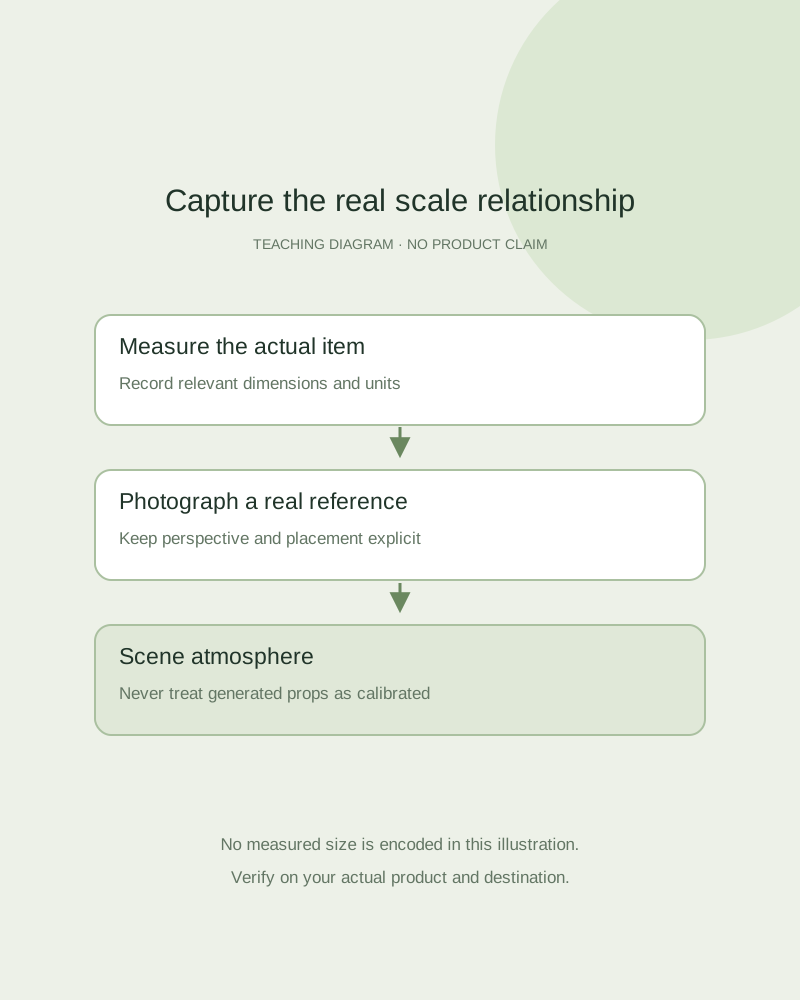
Identify the size question
Ask what the shopper needs to decide: fit on a shelf, hand-held size, usable opening or worn proportion. Record the exact dimensions relevant to that question, including whether the measurement covers packaging or the product itself. Volume, mass and exterior length answer different questions.
Select a reference appropriate to the use. A real item on its intended desk can provide context; a ruler can provide a more specific dimension. Baymard’s product-page research supports giving shoppers an in-scale view. It is not evidence that a generated context will be physically accurate.
Furniture dimensions and useful openings — Link measurements to the correct furniture parts instead of treating a room image as a fit check.
Fabric Pattern Product Photography — Show fabric repeat, motif scale, selvage and drape with factual photographs. Keep an illustrative styling scene separate from exact print and color evidence.
Woven Basket Product Photography — Show a woven basket’s actual opening, handles, base and handmade variation.
Plush Toy Product Photography — Photograph a plush toy’s actual face, limb arrangement, seams and stated size basis.
Plan laptop sleeve product photographs — Photograph laptop sleeve openings, actual interior measurements, lining and pocket contents. Keep styling apart from verified device fit and protection claims.