02 / A PRACTICAL WORKFLOWSTART WITH YOUR PHOTO
01Make the repeat visible on the actual cloth
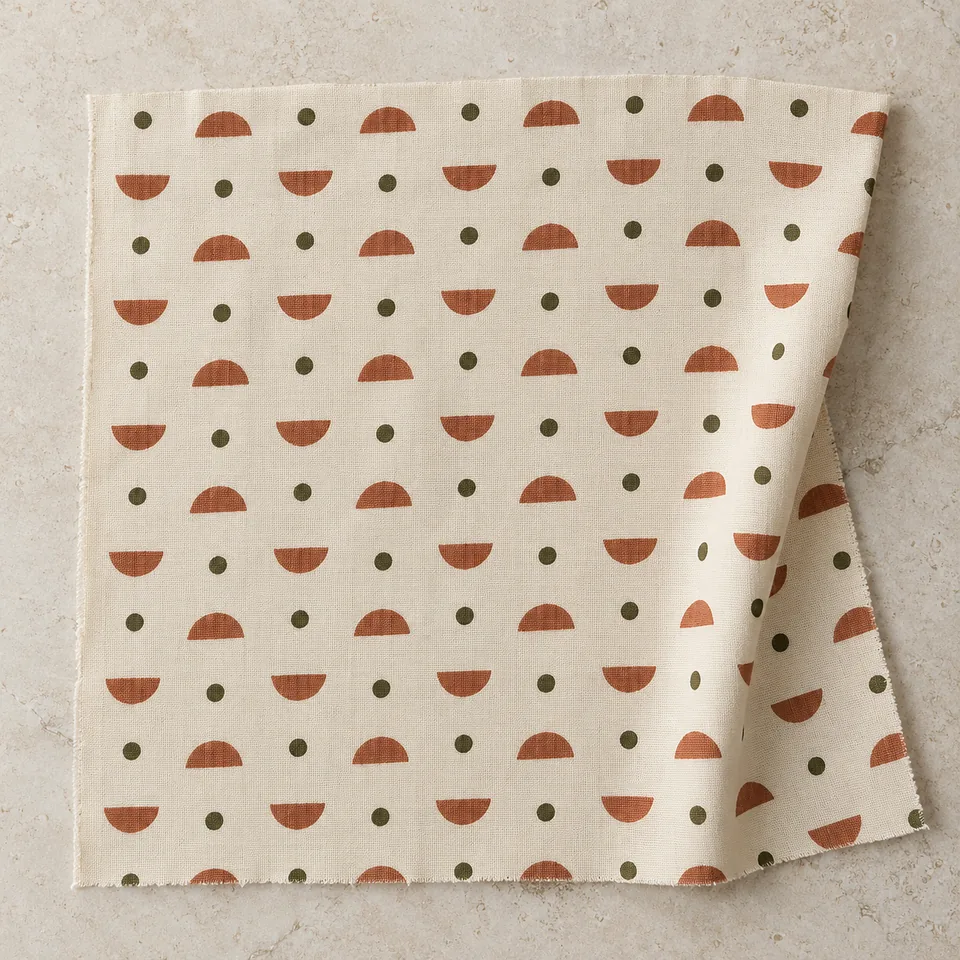
Unroll enough material to include more than one complete repeat in both directions when possible. Keep the cloth square to an overhead camera and smooth loose folds without stretching the print. Mark the grain direction in your working notes and retain an orientation reference outside the sale image. A tightly cropped flower may be attractive but cannot show whether the next row is offset or mirrored.
Spoonflower documents several repeat layouts, including basic and half-drop arrangements. Your photograph should show the layout of the actual fabric you sell rather than borrowing the digital preview of another substrate. Record the print version and base fabric together. The same artwork name alone does not identify its printed scale, material or current batch.
Plan hat product photographs — Plan hat product photos with readable crown shape, brim profile, adjustment and interior size label. Keep styled scenes separate from real fit evidence.
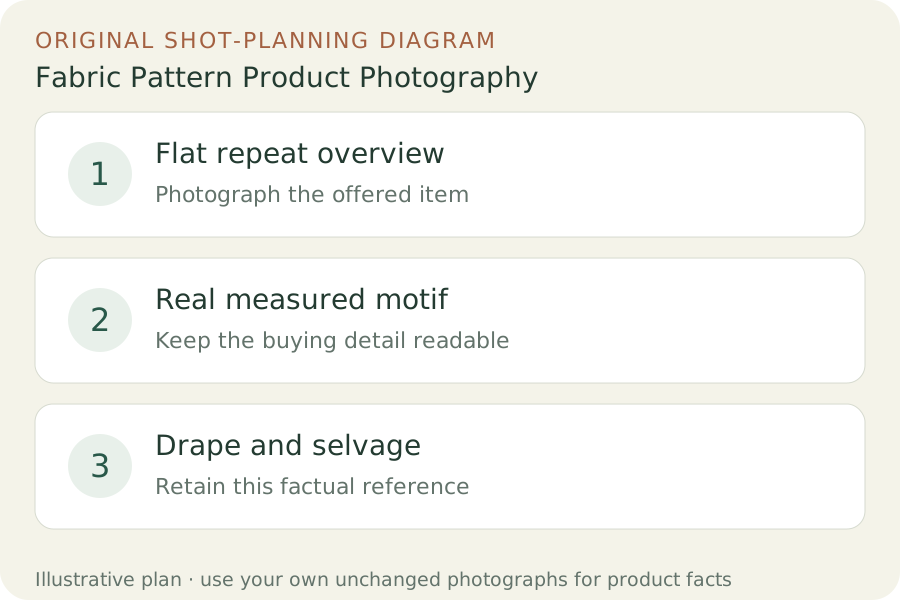
Keep measurement, texture and movement in separate frames
Place a real ruler flat on the fabric beside a complete motif, with both on the same plane. State whether the measurement describes one motif, the whole repeat or the usable width. Photograph a selvage or edge separately if it matters to how the material is supplied. A perspective view with a ruler nearer the camera can exaggerate scale, so use that only as a styling image.
Add one closer texture frame and one gentle fold or hanging drape view. Maintain the same reference light and color processing across them. Describe whether the buyer receives a swatch, cut length or finished object. A pillow made with the fabric can be a labeled application example, but it should not imply that the pillow or its exact pattern placement is what arrives.
Plan zipper pouch product photographs — Capture zipper pouch opening, interior lining, gusset and actual dimensions. Separate empty construction, illustrative loading and secondary AI scenes.
Explore a textile scene without replacing the repeat record
Use one actual fabric photograph for a Fayvoro scene attempt, with the print visible and the edges unobstructed. Request a simple cutting-table or studio surface instead of a finished garment whose fit and construction have not been photographed. One uploaded image cannot certify repeat scale or predict exactly how a print will land on a sewn project.
Check for newly invented motifs, duplicated shapes, a mirrored repeat, changed weave and a larger pattern. Keep the original flat and measured photographs as the buying reference. If a generated fold changes the artwork or obscures its direction, use the factual drape photo instead. Color matching and physical fabric behavior require the real material.