02 / A PRACTICAL WORKFLOWSTART WITH YOUR PHOTO
01Identify the rug and the supplied system
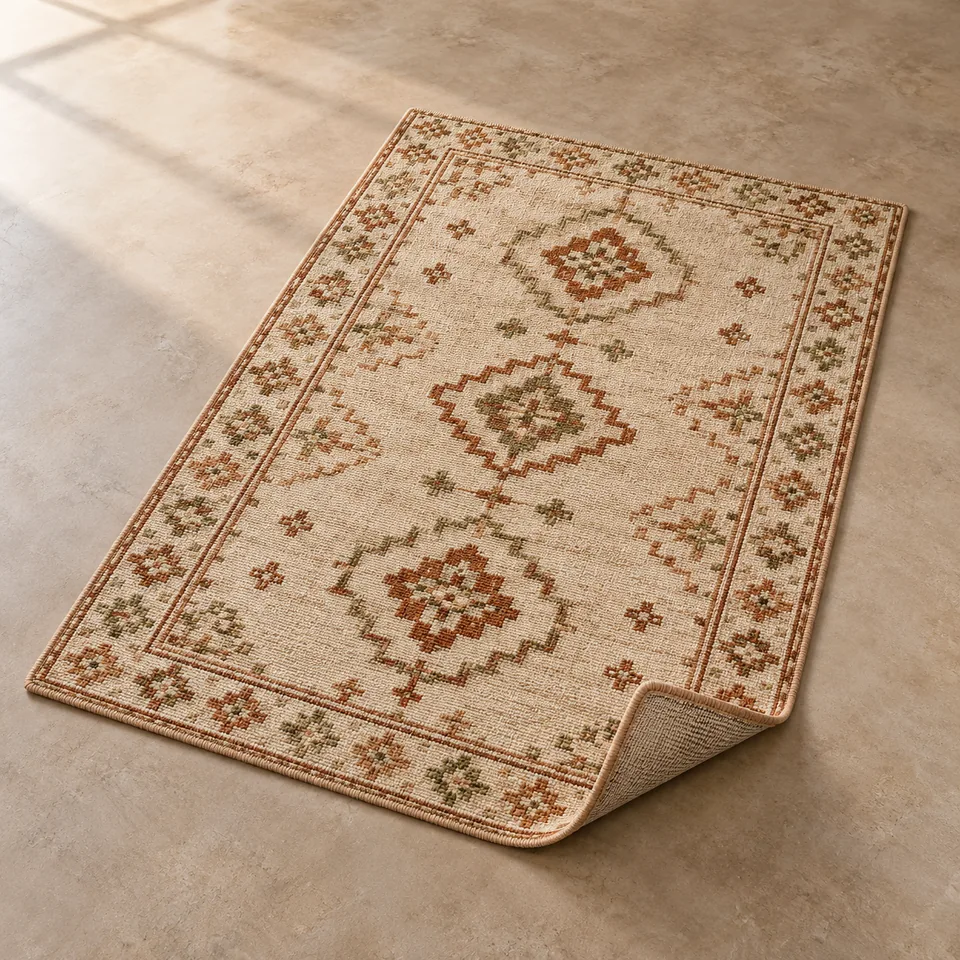
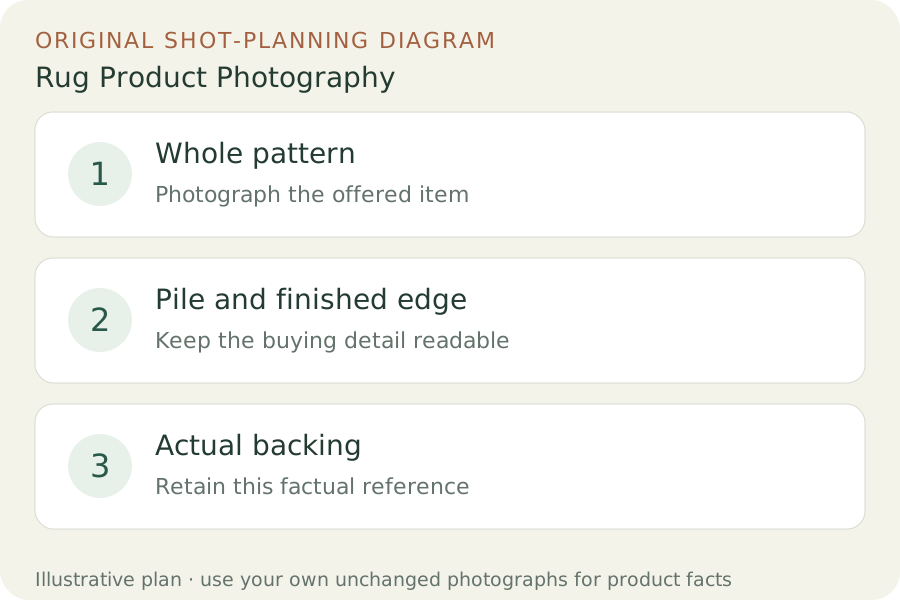
Record the selected size, pattern, color and construction for the session. Lay the actual rug flat enough to show the border and all corners, without stretching it to fit the frame. Use a camera position that keeps the surface as square as practical. If the full rug cannot fit in your room, make a clearly described partial detail and arrange a separate full overview instead of disguising the crop.
Ruggable distinguishes different rug constructions and systems in its product brochure. Apply that separation to your own offer: photograph the actual surface and state whether a pad, backing layer or other component is included. Do not borrow the underside of one construction for another rug because both share the same print name. A folded corner is useful only when it represents the item buyers receive.
Keep texture direction and edge detail honest
Make a close pile photograph under broad side light, then a second view from the opposite direction if the nap changes the appearance. Keep their orientation clear in captions. Include an edge or fringe detail beside a wider frame so shoppers can locate it. Do not increase contrast until a low pile resembles a deep shag or smooth away an edge binding.
Add a real underside photograph and a separate measurement record with the rug laid flat. State whether dimensions include fringe. For a used or unique rug, retain the actual wear, repairs and curled corners in condition images. A room image with a sofa as a reference does not measure the rug, and a perspective view can make a small rug look much larger.
Use a room direction without promising scale or fit
Choose a clear real rug photograph for one Fayvoro scene attempt. Request a restrained room with the pattern unobstructed and plenty of floor visible. This is a composition candidate from one source image, not a certified room visualization or a reconstruction of exact pile. Use measured real dimensions to make the purchase decision.
Review the pattern repeat, border width, fringe count, pile appearance and shape. Look for a candidate that has turned a rectangle into another ratio or repeated the central motif. Reject changed details or keep the original room photograph instead. Do not infer washability, nonslip performance or included padding from the generated floor scene.