PRODUCT STORIES / A CREATIVE GUIDE

Silicone Baking Mold Product Photography

Count the empty cavities before showing the bake.

A finished muffin or chocolate can hide the mold that produced it. Buyers need the empty cavity pattern, actual interior shape, underside and tray footprint. Keep a real baking result separate from the mold itself, and do not let a styled image imply food, temperature limits or release performance.

Sign up for 3 free credits · Your starting direction is included.See the example
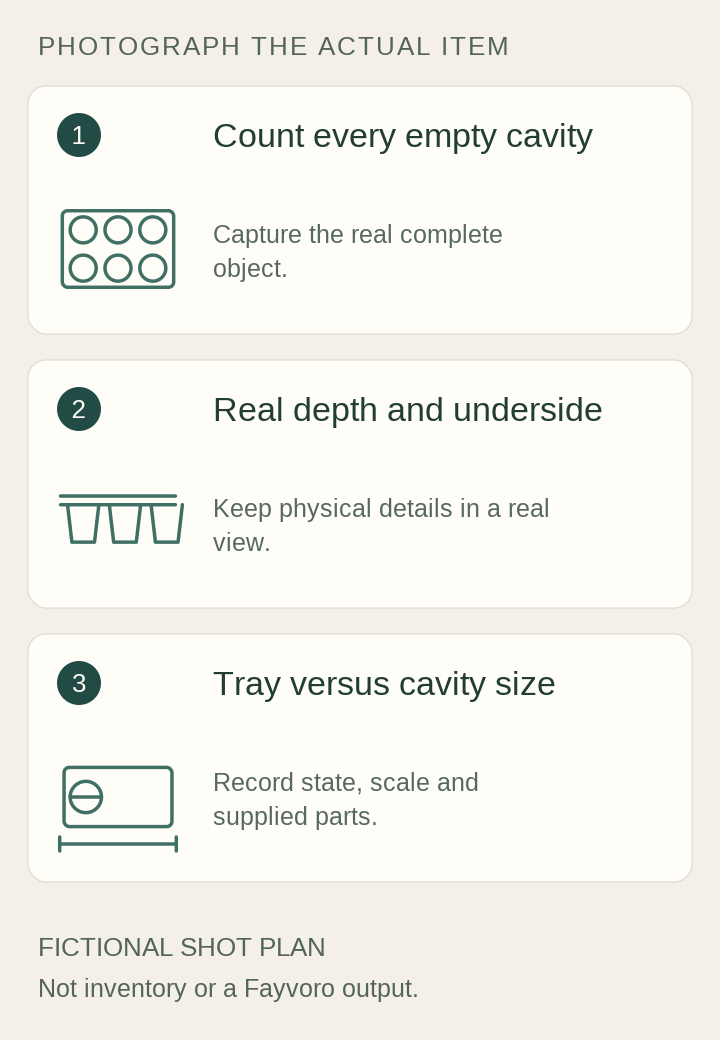
Original fictional shot plan: Count every empty cavity, Real depth and underside, Tray versus cavity size
EDITORIAL CONCEPT
01 / EXAMPLEILLUSTRATIVE CONCEPT
What this shows

Give each real photograph a distinct job.

These original schematic views organize a physical shoot. Their geometry and labels are illustrative, not specifications for a manufactured item.

Original fictional shot plan: Count every empty cavity, Real depth and underside, Tray versus cavity size
Editorial conceptOriginal fictional teaching diagram, not an inventory photograph, a Fayvoro output or a customer result. Use real photos for dimensions, construction, condition and included parts.

This image is an editorial concept made for the site. It is not a Fayvoro generation or customer result. AI can change product shape, color, packaging, labels, and text. Check every important detail against the real item.

YOUR STARTING IDEA

Take the direction. Make it your own.

Set my actual empty silicone baking mold on a simple dry surface. Keep the complete cavity layout, rim and visible depth. Add no food, extra cavity, support frame, writing or tools. I will compare the geometry with my source photo.
Add your reference photo in the studio, then adjust the direction.
Before you publish

Compare the result with your real product and your destination’s requirements.

  • Every real empty cavity is visible and counted.
  • Top, depth and underside belong to one mold.
  • Cavity size is distinct from overall tray dimensions.
  • Baked examples and material claims have separate evidence.
02 / A PRACTICAL WORKFLOWSTART WITH YOUR PHOTO
01

Show the cavity pattern without a hidden corner

Photograph the actual empty mold from above with every cavity in frame. Add an oblique view that reveals the rim and cavity depth, then turn the same item over to show the underside. Keep flexible walls relaxed on a flat surface rather than pulling them to make the spaces appear wider.

de Buyer’s muffin-mold example distinguishes its cavity count from overall tray dimensions. Use that distinction for your own product, checking the exact shape and sale format. A sheet with joined cavities, separate baking cups and a rigid support frame are different offers; photograph only the parts actually supplied.

02

Record cavity dimensions and use evidence separately

Measure the relevant internal opening and depth with a stated method, separately from the longest outside span. For tapered cavities, an upper opening is not the same as the base. Keep any embossed maker marks readable in a real photograph, and record material and permitted uses from current product documentation.

If you show a finished bake, identify the actual mold, recipe conditions and whether the food is included or merely demonstrative. A clean generated muffin cannot establish release, heat resistance or food-contact suitability. Avoid turning a plausible silicone appearance into a verified material or temperature specification.

03

Inspect cavity count through a scene experiment

For a Fayvoro trial, upload a clear owned empty-mold photograph and request one uncluttered kitchen background. Compare every cavity, ridge, rim and handle hole. AI may add a row, merge two wells, thicken a flexible sheet or fill the cavities with cakes that were never made.

Keep the real top, side and underside views regardless of the styling result. Reject invented embossing, extra food and unverified colour variants. The editorial teaching plan is fictional; it does not show a real mold, a successful Fayvoro bake image or measured performance. Actual product facts should remain traceable to physical stock.

Common questions

A few things to know.

Can a finished cake replace an empty mold photo?

No. It can hide cavity depth, wall details and even the count; include actual empty views.

Can a generated image prove easy release?

No. Release needs a real documented demonstration with the identified mold and preparation.

Make your image with intention.