All product image guides Woven Basket Product Photography

Show the opening and the base before filling the basket.

A full basket can suggest a useful room arrangement while hiding its capacity, bottom and construction. Give shoppers empty factual views first. A secondary storage scene should support that information rather than invent a larger opening or a stronger handle.

Explore a scene from your real photo Two free credits when you sign up. Review the result before publishing.
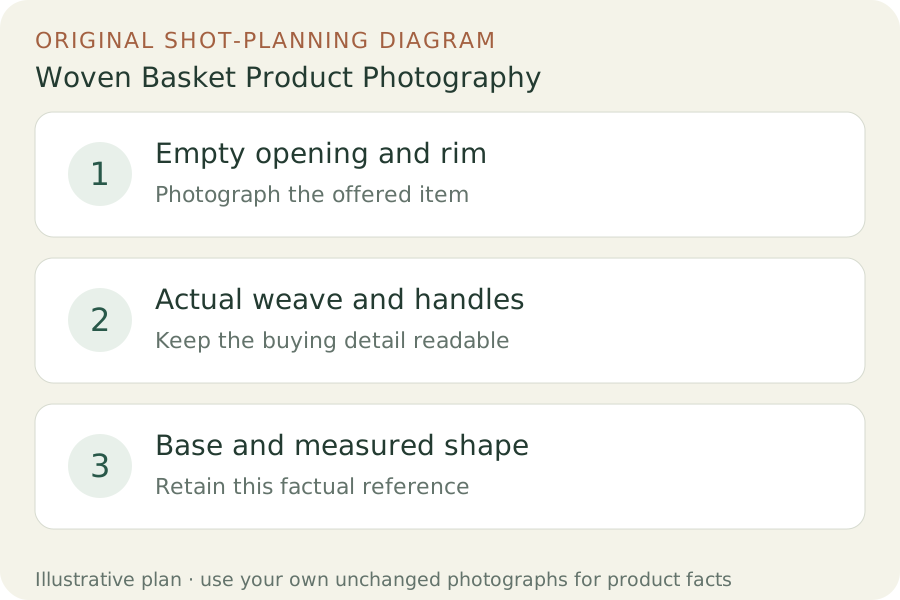
Original teaching diagram: Empty opening and rim, Actual weave and handles, Base and measured shape
EDITORIAL CONCEPT
01 / EXAMPLEILLUSTRATIVE CONCEPT
What this shows

Give each photograph one clear job.

Use the three labeled views to plan your factual gallery. The outlines show composition roles only; they contain no observed dimensions, verified materials or performance measurements. Keep real photographs beside any secondary scene candidate.

Original teaching diagram: Empty opening and rim, Actual weave and handles, Base and measured shape
Editorial conceptOriginal teaching diagram for shot planning. Illustrative outlines, not a photograph of inventory, a Fayvoro output or a customer example.

This image is an editorial concept made for the site. It is not a Fayvoro generation or customer result. AI can change product shape, color, packaging, labels, and text. Check every important detail against the real item.

02 / A PRACTICAL WORKFLOWSTART WITH YOUR PHOTO
01

Photograph the shape of the actual handmade item

Record the offered basket type, material description and selected size. Take an empty angled view that shows the rim and interior, then a straight side profile. For unique pieces, keep the photographed item connected to its inventory record. For representative handmade stock, state the variation actually expected instead of silently smoothing every basket into the same geometry.

The Basket Room explains that handmade baskets can vary in size and shape and lists dimensions for specific offers. Apply that principle to your record: distinguish overall diameter, opening diameter and height when they answer different questions. A narrow rim can matter even when the body is wide. Do not measure capacity or shelf fit from a generated room scene.

02

Keep the weave, handle attachment and base visible

Add a closer real frame of the weave and rim finish. Use gentle side light so intersections remain legible without producing a false heavy texture. Photograph a handle attachment separately when it is a buying feature, and turn the basket over for the base. Do not conceal relevant loose strands, an uneven foot or a repair in the factual gallery.

Make any measurement photograph on the actual basket, with clear units and a stated dimension. Then stage a filled view using props appropriate to the offer, explicitly identifying excluded towels, toys or plants. A plant inside a basket does not establish that it is a waterproof planter, and a photograph of loaded handles is not a load-rating test.

03

Explore storage styling without changing capacity

Start a Fayvoro scene attempt from one clear basket photograph and request a simple shelf or floor display with the opening visible. Prefer an empty basket when its shape needs to remain reviewable. This is one scene candidate; it does not reconstruct the underside or certify that the basket fits a particular shelf unit.

Compare rim width, handles, weave pattern, base and proportions against the real reference. Reject extra handles or a changed material. If the scene adds contents, check that they do not imply an unsupported capacity or included bundle. Keep your empty and measured photographs as the actual purchasing record.
Direction to try

A useful starting note.

Use this as a starting point, then adjust it for your own product. No prompt can guarantee exact product details.

Use my actual empty woven basket photo for one secondary storage-display scene. Keep the opening, rim and handles visible on a quiet neutral shelf or floor. Add no contents, lining or extra handles. I will check the shape and weave against the real item; this is not a capacity or shelf-fit test.
Before you publish

Check the details.

  • Actual-item and representative handmade stock roles are stated.
  • Opening, body and height dimensions are distinguished.
  • Handle attachments and base appear in real photographs.
  • Waterproofing and load claims do not come from styling.
  • Filled-scene props are identified as excluded unless supplied.
Common questions

A few things to know.

Can I use a plant scene for every storage basket?

Only where the role is clear and does not imply waterproof or food-contact suitability. Check the actual maker’s usage information and identify any excluded planter.

Should all handmade baskets look exactly alike?

Do not edit away the variation buyers will receive. Show the actual piece or state the real range for representative stock.

Can a shelf scene prove the basket fits?

No. Use measured basket dimensions and the actual shelf opening. Perspective and generation can change apparent size.

Make your image
with intention.

Explore a scene from your real photo