PRODUCT STORIES / A CREATIVE GUIDE

Scarf Product Photography

Reveal the finished scarf before a fold hides its design.

A scarf tied into a small knot may hide most of the artwork and make a rectangular piece look square. Give buyers the complete finished design first, then show how the same item changes when folded or tied.

Sign up for 3 free credits · Your starting direction is included.See the example
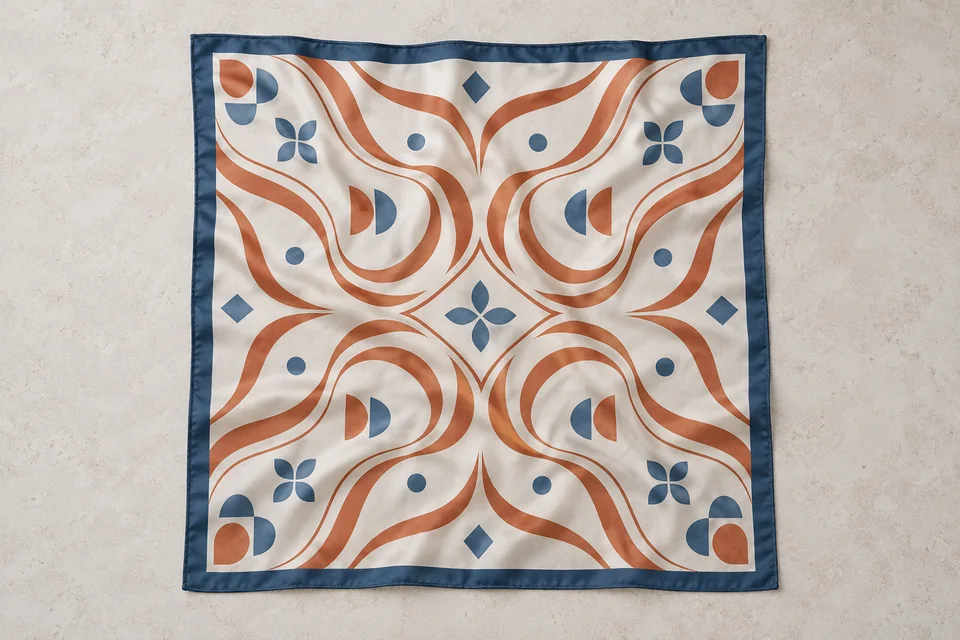
Complete fictional square scarf showing all corners and its blue border on a pale surface
EDITORIAL CONCEPTAn editorial composition concept showing the full pattern border. Fibre, size and finishing must be verified from the real scarf. Not a Fayvoro output.
01 / EXAMPLEILLUSTRATIVE CONCEPT
What this shows

Give each factual view a specific job.

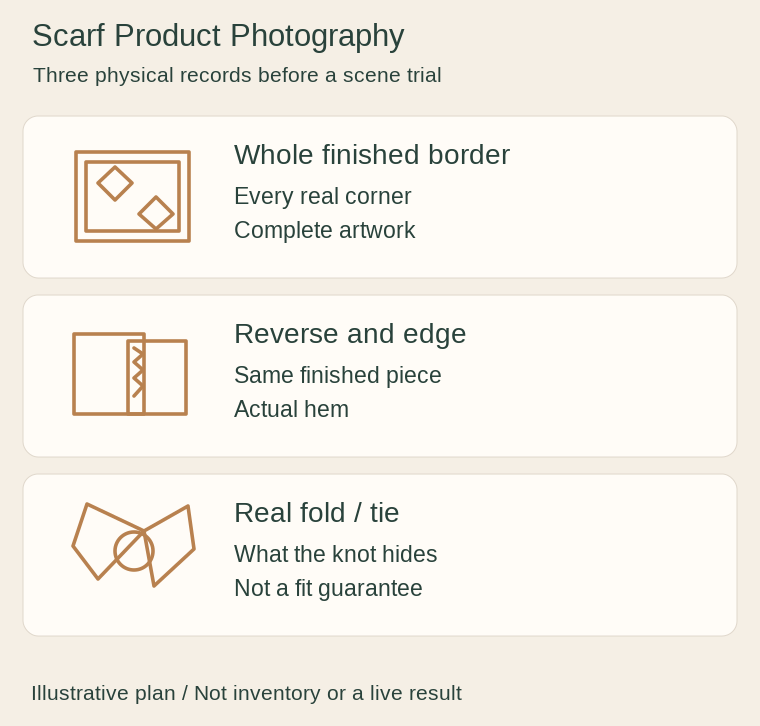
The plan below separates actual product records from a possible secondary scene. Its drawings help organize the gallery; use your own physical item and verified records for every sale fact.

Original teaching plan: Whole finished border, Reverse and edge, Real fold / tie
Editorial conceptOriginal illustrative teaching plan. Fictional shapes, not a photograph of inventory, a Fayvoro output or a customer case. No dimensions, composition or performance facts are asserted.

This image is an editorial concept made for the site. It is not a Fayvoro generation or customer result. AI can change product shape, color, packaging, labels, and text. Check every important detail against the real item.

YOUR STARTING IDEA

Take the direction. Make it your own.

Use my actual scarf photograph to explore one uncluttered tabletop display. Add no person or extra textile. I will check the full border, motifs, corners, reverse and edge finish against my original scarf photographs.
Add your reference photo in the studio, then adjust the direction.
Before you publish

Compare the result with your real product and your destination’s requirements.

  • Full overview shows every finished corner and border.
  • Reverse and edge detail belong to the same scarf.
  • A tied view identifies the design it hides.
  • Generated folds do not redefine artwork or actual shape.
02 / A PRACTICAL WORKFLOWSTART WITH YOUR PHOTO
01

Capture the complete finished boundary

Lay the actual scarf flat with every corner and the entire border visible. Arrange gentle folds only after taking this overview. Unlike fabric sold by length, a finished scarf has a specific outline and edge treatment; cropping to one motif can leave the buyer uncertain about the rest of the design.

Turn the same scarf over and record whether the reverse has different artwork, a muted print or a different finish. Photograph the hem, fringe or rolled edge close enough to inspect. Fox & Chave’s scarf example pairs flat artwork and detail images with styling, showing why each view has a different job.

02

Keep a real tie view connected to the overview

Select one normal fold or tie that suits the actual shape and length. Make a real permitted worn photograph or a clearly identified display view, then tell the buyer which part of the artwork the knot conceals. Do not stretch the textile to make the complete print visible in every arrangement.

Record dimensions on the real finished piece using a consistent method. Describe material and care from verified product records. A draped picture cannot demonstrate warmth, silk content or comfort, and reflected light can shift colour. Keep the flat reference alongside the fold so shoppers can identify the same border and motifs.

03

Explore atmosphere without replacing the design record

Upload an approved photo for one uncluttered tabletop scarf scene. Fayvoro can explore the surrounding presentation, but generated folds may redraw motifs, mirror the border or alter the cut. It does not reproduce a scarf print with guaranteed accuracy or provide a reliable virtual wearing demonstration.

Compare the complete visible border, reverse, corner shape and edge finish before using a candidate. If the scene hides the unique artwork, use it only as supplementary atmosphere or discard it. The factual flat and tied images should remain the buyer’s source for the finished product, rather than a generated textile pattern.

Common questions

A few things to know.

Can I use one close-up of the pattern?

It can supplement a complete overview, but does not show the finished scarf’s full border, cut or reverse.

Does a scarf scene preserve the artwork exactly?

No. Review motifs, border, folds and corners against the source. Keep real artwork evidence.

Is the editorial scarf the cited brand’s product?

No. It is an original fictional concept and does not copy or establish any manufacturer’s inventory.

Make your image with intention.