02 / A PRACTICAL WORKFLOWSTART WITH YOUR PHOTO
01Reveal holes or the rear shank
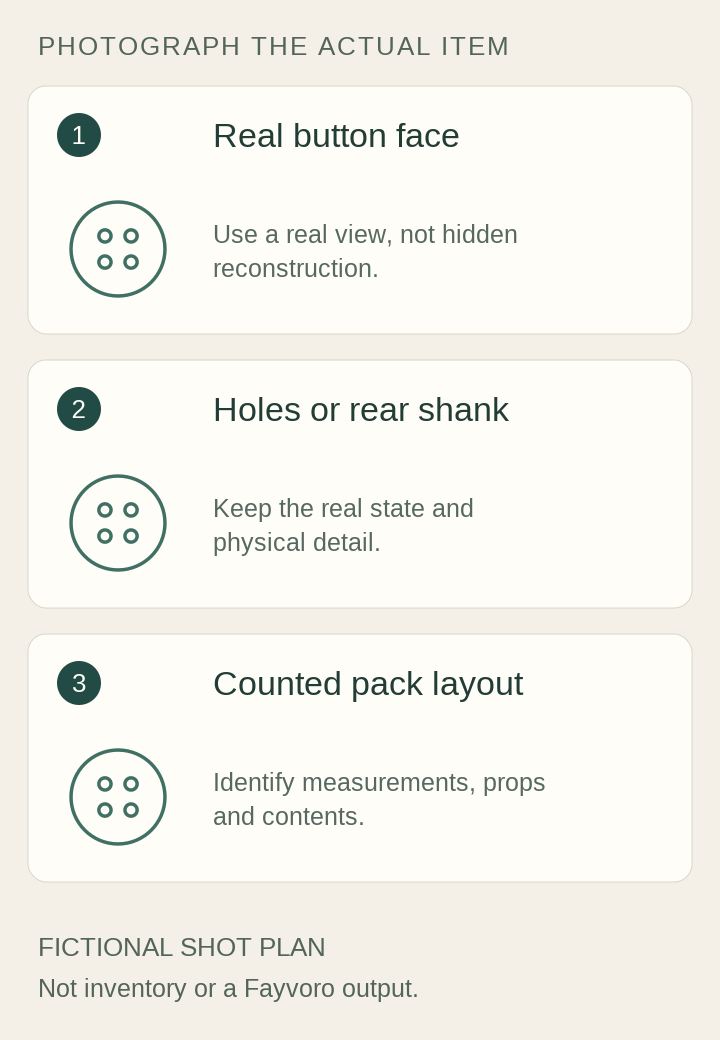
Photograph a representative actual button face-up and from the reverse. For a sew-through design, show the real hole count clearly; for a shank design, use an angle that reveals the loop and its direction. Avoid a dark reflection that makes a shallow decoration look like a hole.
Keep the same reference button in the front and back record. Prym’s corozo range distinguishes sizes and quantities across variants, illustrating why a generic assortment image is not enough. Do not invent a rear fixture from an ornate front or substitute a four-hole diagram for a two-hole sale unit.
Sewing Thread Product Photography — Pair actual spool, readable colour/length/size identifier and real stitch sample; thread size is not photographed spool diameter.
Measure and inventory the exact option
Record diameter or the relevant width of a non-round button, thickness and any required rear projection. Pair the measured item with the variant name. Buttonhole fit, garment compatibility and washing behaviour need checked specifications or an actual permitted test, rather than a photograph next to fabric.
Count the pieces in the offered pack and identify mixed colours or sizes explicitly. A tube, card and loose group are different presentations of a sales unit; do not make an extended styled scatter imply extra pieces. If the maker’s variation is material to selection, photograph the actual offered group.
Lace Trim Product Photography — Keep full trim width and scallop/straight edges visible, record motif repeat and show how sold length relates to continuous cut yardage.
Explore a small-group scene after inventory approval
Use a clear actual single-button or approved pack photograph for one Fayvoro craft-table composition. Request no extra buttons, thread or garments. Small hole patterns and shanks can be changed or lost in a new image, so compare them with the originals at full size.
Keep your real counted layout and mounting details in the gallery. Reject an output that joins holes, adds a back loop or duplicates the sale units. Any assembled garment example should be photographed from the real construction; this page does not verify a generated closure under use.