02 / A PRACTICAL WORKFLOWSTART WITH YOUR PHOTO
01Keep empty and filled silhouettes distinguishable
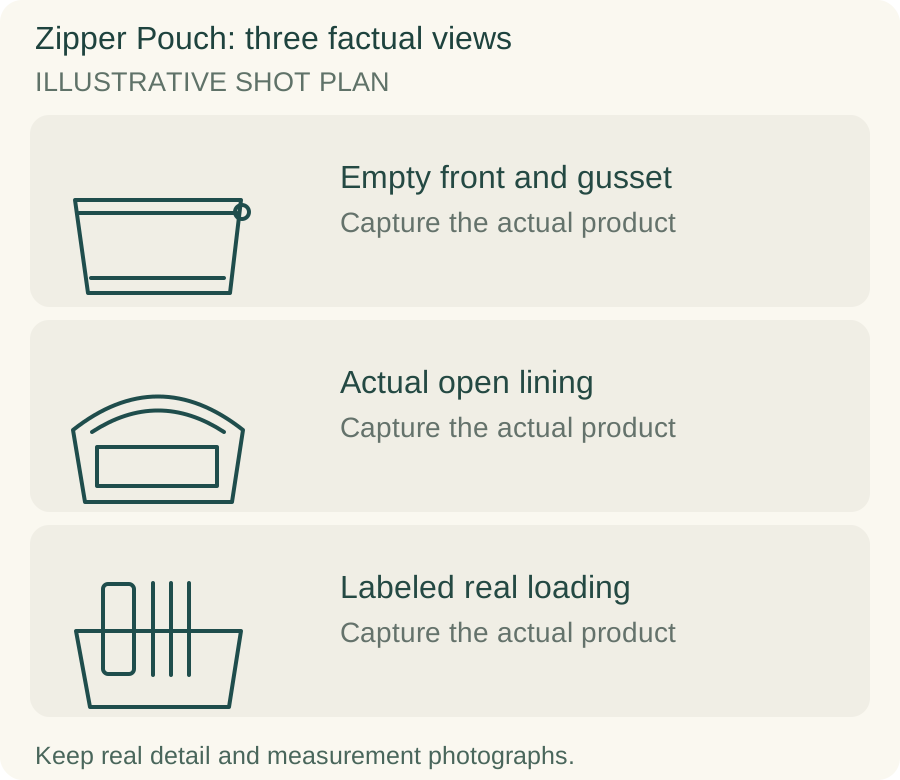
Photograph the actual pouch empty from the front, side and base. For a soft pouch, let it relax naturally instead of inserting a form that permanently suggests rigidity. Take a separate filled view only after the empty construction is documented. Bellroy describes different flat and loaded states for its pouch design; your product needs its own truthful state record.
Show the gusset or boxed corners, zipper ends and pull in detail. Record the selected fabric and lining as one variant. A pouch can share a printed exterior with another version while having a different base or interior. For patterned fabric, photograph the actual placement on stock or explain that placement varies instead of showing one ideal crop as universal.
Make the opening and internal layout visible
Open the zipper and photograph the actual lining without stuffing the interior with unrelated objects. Add a closer view of internal pockets or separators when present. Keep the zip track readable at its ends. If the opening is narrower than the body, document that distinction rather than treating exterior width as usable access width.
Use real measurements for the offered body size and any relevant opening width. For a loading example, use actual items and list them in the caption so the buyer understands the setup. Do not imply that pens, cosmetics or cables are included when they are styling props. A familiar object in a generated pouch does not establish fit or useful volume.
Explore a scene with construction still visible
Choose a clear real source of one pouch to explore a desk or travel still life in Fayvoro. Do not ask a scene to invent the hidden lining or contents. The generator does not calculate capacity or test a coated zipper’s resistance to water. Preserve the real empty, open and loaded photographs as distinct parts of the gallery.
Inspect the zip path, seam direction, pull count, base shape and print placement in the candidate. Watch for extra pockets and a soft body that has become stiff. If a scene includes an object emerging through a closed zipper, reject it. Keep material and water-resistance claims tied to actual specifications rather than a glossy surface or imagined droplets.