02 / A PRACTICAL WORKFLOWSTART WITH YOUR PHOTO
01Match the outside to one real interior
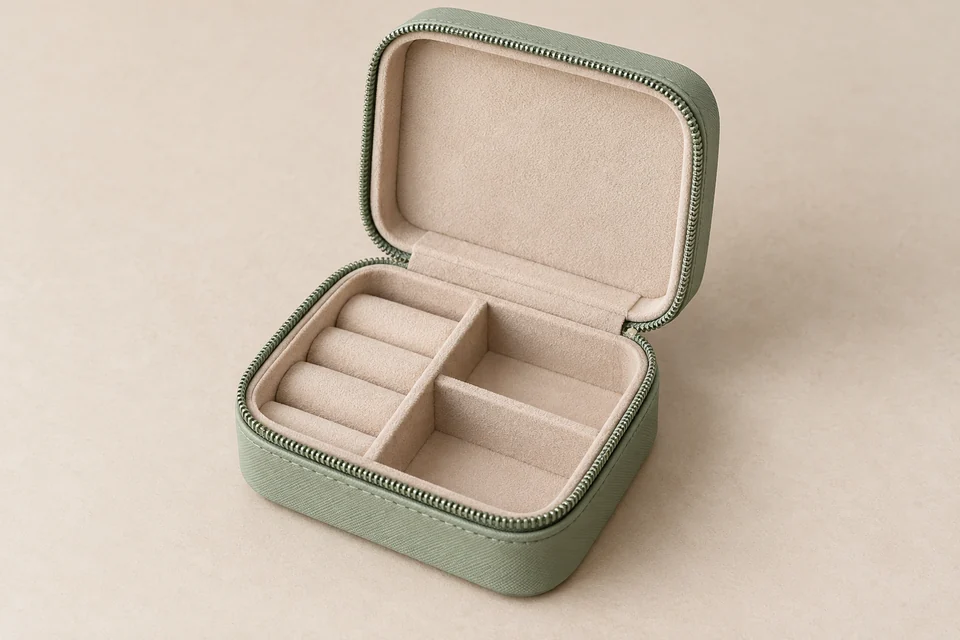
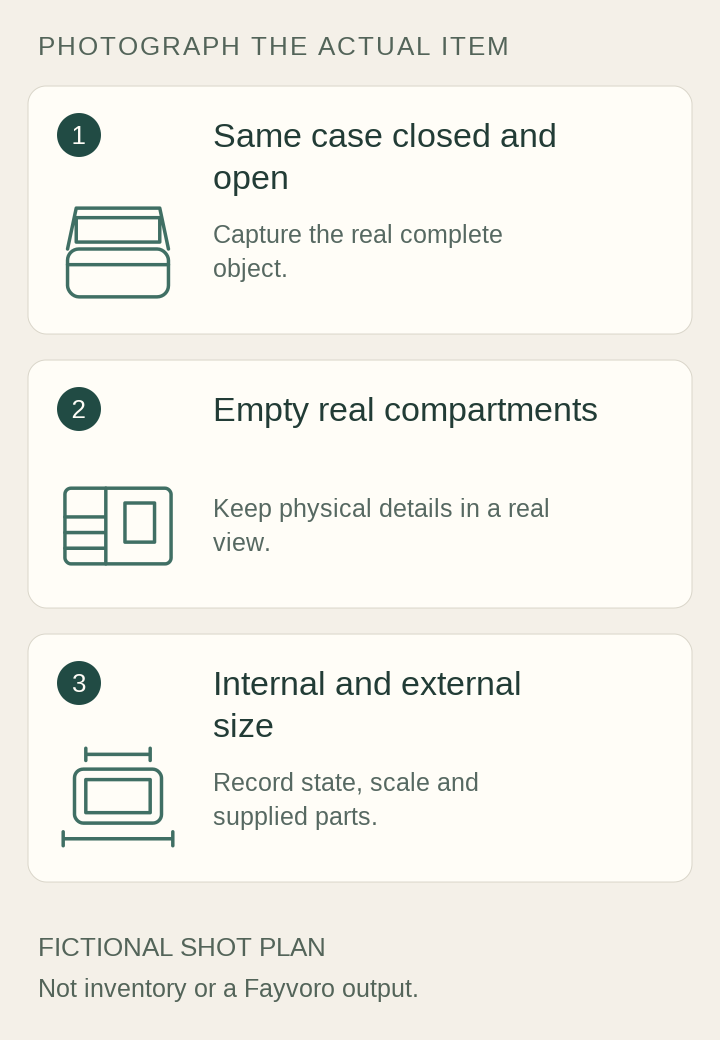
Photograph the case closed, then open the same unit fully within its normal hinge or fabric limits. Keep the empty lid lining, base, ring rolls and compartments readable. Show removable dividers or pouches outside the case only if they really detach, and retain an assembled view that explains where they belong.
Stackers lists separate travel-box sizes and hardware choices. Do not mix a large interior photograph with a small exterior variant. Create a source-to-SKU record for colour, size, lining and fastening, and check each selection against the actual unit rather than assuming that every variant shares the same storage layout.
Measure space where the jewelry must fit
Record the closed external dimensions for packing, then measure the relevant internal compartment and opening separately. A padded lining and ring rolls reduce usable space. Avoid measuring across the outside wall and describing that distance as the length available for a rigid bracelet or long earring.
If fit is important, place one identified real piece into the actual compartment and show whether the case closes normally. State that the jewelry is excluded unless it is sold with the case. A neat necklace arrangement cannot establish tangle prevention, scratch protection or room for an unspecified collection during travel.
Review dividers and fastening after scene exploration
For Fayvoro, use an owned open-case photograph and request an uncluttered tabletop. Compare the number and position of real dividers, zipper route, hinge edge and lining. AI may duplicate ring slots, flatten a lid pocket or add a mirror that the original case never had.
Keep the actual empty interior and closed-case photographs in the listing. Reject generated jewelry, enlarged compartments and modified hardware. A fictional editorial scene cannot demonstrate a real collection’s fit, protection or travel performance. The useful output is a presentation direction to inspect, while real storage evidence stays with the original product.