All product image guides Towel Product Photography

Show the towel unfolded before selling the stack.

A folded towel stack communicates a bathroom mood while hiding the towel’s outline, border and actual count. Make an unfolded view and a close texture record, then use a supporting scene without inventing softness or absorbency.

Explore a scene from your real photo Two free credits when you sign up. Review the result before publishing.
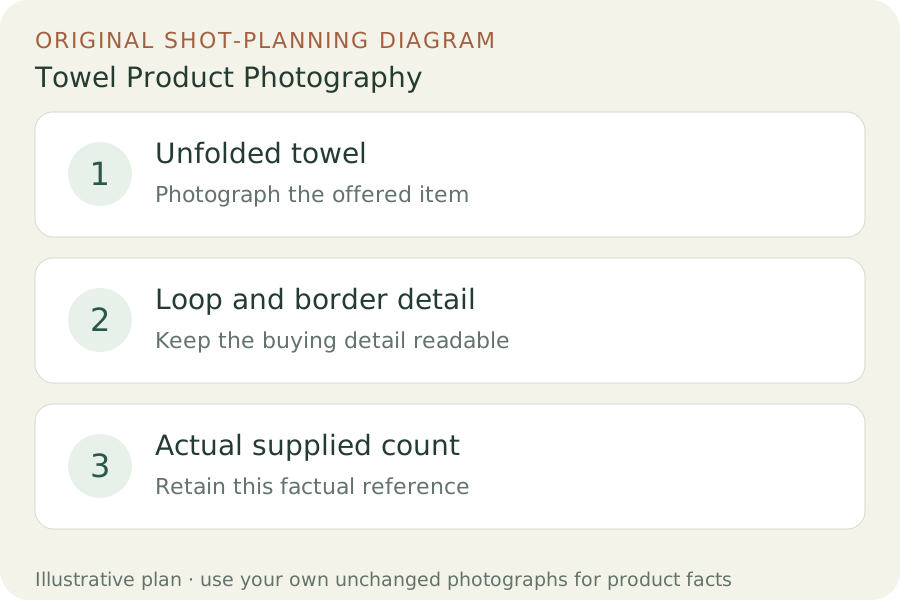
Original teaching diagram: Unfolded towel, Loop and border detail, Actual supplied count
EDITORIAL CONCEPT
01 / EXAMPLEILLUSTRATIVE CONCEPT
What this shows

Give each photograph one clear job.

Use the three labeled views to plan your factual gallery. The outlines show composition roles only; they contain no observed dimensions, verified materials or performance measurements. Keep real photographs beside any secondary scene candidate.

Original teaching diagram: Unfolded towel, Loop and border detail, Actual supplied count
Editorial conceptOriginal teaching diagram for shot planning. Illustrative outlines, not a photograph of inventory, a Fayvoro output or a customer example.

This image is an editorial concept made for the site. It is not a Fayvoro generation or customer result. AI can change product shape, color, packaging, labels, and text. Check every important detail against the real item.

02 / A PRACTICAL WORKFLOWSTART WITH YOUR PHOTO
01

Identify the towel size and what the customer buys

Record the product line, selected size, color and supplied count. Photograph a single towel separately from a bundle. Keep hand towel, bath towel and bath-sheet views tied to their real dimensions rather than scaling one image to stand for another. If a representative color sample is used, identify its role and keep the selected variant clear.

Brooklinen defines GSM as fabric weight per unit area. Keep that value in the exact product information when documented; a fluffy image is not a measurement. Photograph the actual loops and border without claiming that visual thickness proves absorbency, drying speed or fiber quality. A decorative bathroom arrangement cannot establish those properties.

02

Make loops and border legible without false loft

Lay the towel flat enough to show all edges, using stable broad light and a camera square to the surface. Add a closer loop-texture frame and a border or hanging-loop detail when present. Keep the pile recognizable rather than sharpening until each loop becomes an exaggerated rope. Record any washing or preparation actually performed on the sample.

Measure the real towel and state whether the measurement is before or after any documented sample preparation. Then make a separate folded stack using only the pieces in the offered set. If a bath tray, soap or plant enters the scene, identify it as an excluded prop. A large pile of towels should not make a one-towel offer look like a multi-piece bundle.

03

Try bathroom styling while retaining the actual fabric record

Upload one real towel or actual bundle photograph for a Fayvoro scene attempt. Request a quiet bathroom shelf with the offered towel unobstructed. Keep the unfolded and close texture photographs alongside it. This is a scene candidate, not a fabric simulation or laundering test.

Check loop appearance, border width, color, dimensions implied by folding and piece count. Reject extra towels, a changed weave or newly embroidered branding. A spa-like scene does not establish softness, absorbency or a luxury grade. Preserve real measurements and reliable specifications as the purchasing reference.
Direction to try

A useful starting note.

Use this as a starting point, then adjust it for your own product. No prompt can guarantee exact product details.

Use my actual towel photograph for one restrained bathroom-shelf display scene. Keep the existing towel, real border and texture visible with soft neutral light. Add no towels, embroidery or supplied toiletries. I will compare fabric and count with the real product; this is not an absorbency or fabric-weight test.
Before you publish

Check the details.

  • Size, color and count match the actual selected offer.
  • Unfolded view shows the real edges and border.
  • Loop texture has not been exaggerated or changed.
  • Documented GSM remains a specification, not an image inference.
  • Bathroom props and additional towels have clear inclusion status.
Common questions

A few things to know.

Can a fluffy photograph prove the towel’s GSM?

No. GSM is a fabric-weight specification. Use the documented value for the exact product rather than estimating it from a scene.

Should I show a stack for a single-towel offer?

Make the supplied count clear and keep a single actual towel view. A stack of excluded towels can confuse what the buyer receives.

Can Fayvoro show how absorbent the towel is?

This workflow explores presentation, not an absorbency or laundering test. Keep performance statements tied to real product evidence.

Make your image
with intention.

Explore a scene from your real photo