02 / A PRACTICAL WORKFLOWSTART WITH YOUR PHOTO
01Show the actual filled unit and label
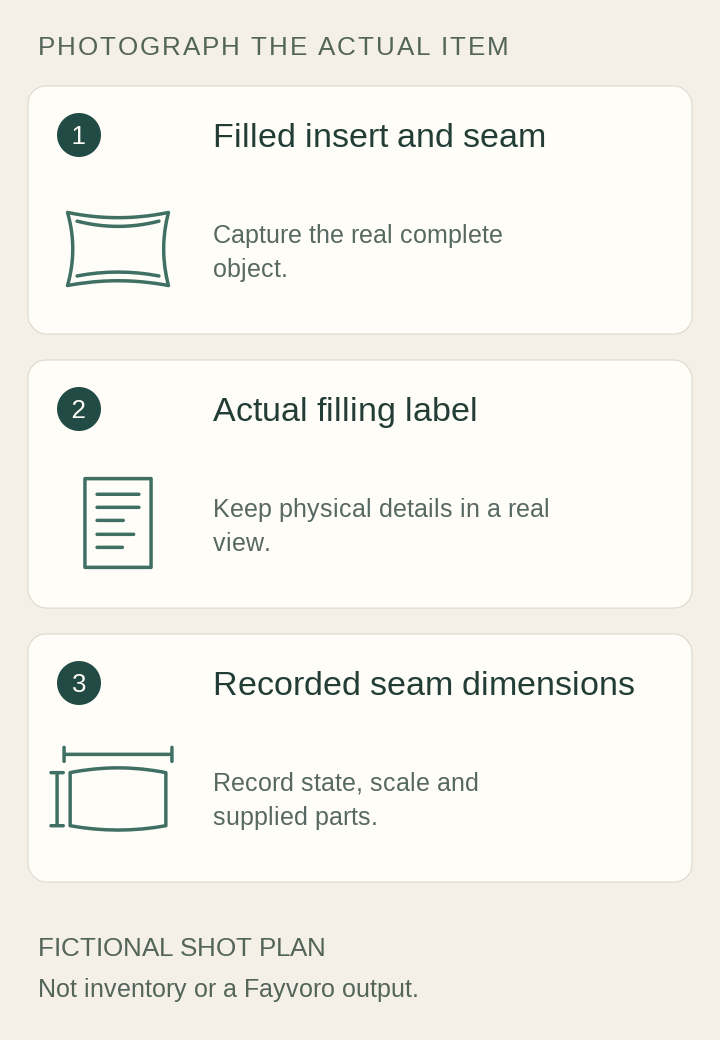
Photograph the insert on its own, including the perimeter seam and the actual filling and care label. Keep the sewn shell visible; do not hide it entirely inside a decorative cover. A label detail answers a material question that a smooth white surface cannot.
IKEA’s FJADRAR listing distinguishes an inner cushion and its dimensions from decorative covers. Apply that distinction to the offer you sell, using your own verified filling records. A fibre-like texture or floating feather in a scene is not evidence of the composition inside the shell.
Record measurement and packaging states
Measure the insert using a stated seam-to-seam method and record how the filled object is positioned. Keep a nominal cover size separate from measured insert dimensions. Do not stretch a soft insert or photograph a ruler at an angle merely to force a preferred number.
If sold compressed, show the actual packed unit separately from its later settled state, following the product’s own preparation instructions. Record when the latter was photographed. Loft, softness and recovery may vary; a rounded picture alone does not establish firmness, fill mass or compatibility with every cover.
Use a scene without changing the filling story
For Fayvoro, upload a clear owned insert photograph and ask for a plain bench or studio surface. Inspect seam placement, corners, thickness and the visible label. AI may add a zipper, make a shell look like a cover or remove the seam to exaggerate loft.
Keep the actual measurement, label and packaging photographs beside any selected scene. Do not use a generated seated person or flattened cushion as a compression test. This workflow creates an image candidate, not a validated support, allergy, washability or recovery claim for the supplied filling.