02 / A PRACTICAL WORKFLOWSTART WITH YOUR PHOTO
01Photograph the actual lid and opening
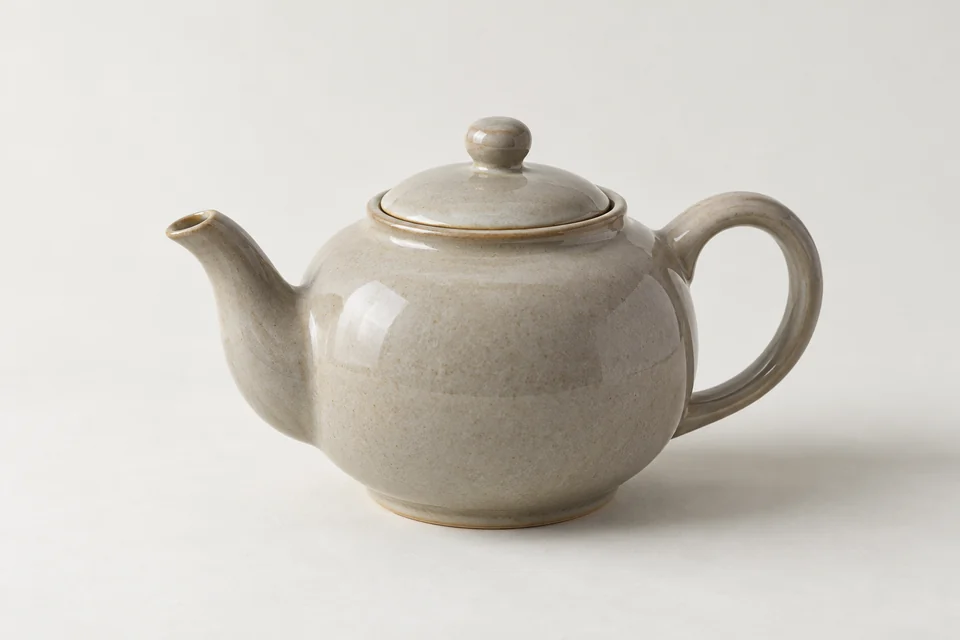
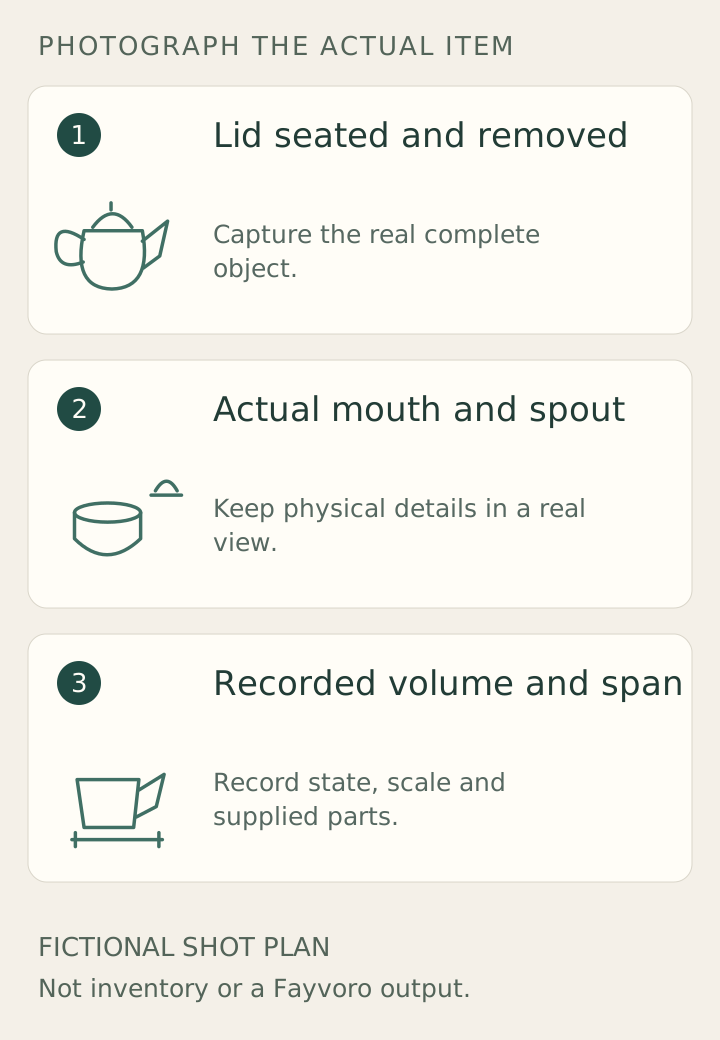
Capture the same teapot with its lid seated and removed. Keep the lid beside the body in the second frame so a shopper can relate its flange, rim and knob to the opening. Photograph any supplied infuser separately, including its seating surface.
Le Creuset’s example distinguishes its lid and spout features. Your pot may use a different construction: record the real locking tab, plain lip or strainer instead of borrowing another maker’s mechanism. A tight crop must not hide a chip or an uneven lid edge.
Tea Infuser Product Photography — Expose the empty mesh and base, explain support-rim fit with a real vessel, and identify whether a lid also serves as the included drip tray.
Show volume and footprint as different facts
Record the maker’s stated capacity and how it is defined; do not count small styled cups to infer usable servings. For a physical measurement, document the vessel, measurement method and fill line. Keep that record distinct from height, widest handle-to-spout span and base footprint.
Use an unlit, empty setup for detail capture. A photograph of hot tea cannot establish heat resistance, stovetop suitability or a drip-free pour. If a real pouring demonstration is relevant and permitted by the product instructions, retain it as evidence of that particular tested setup.
Review a scene against the complete assembly
For a Fayvoro trial, upload a clear owned teapot photograph and describe one quiet tabletop. Check the handle gap, spout opening and lid seam against the original. AI may merge the lid into the body, add a second spout or invent steam.
Keep the real open-mouth and lid photographs in the listing even when a scene works visually. Reject altered fittings, invented glazing or extra tea accessories that appear included. This page’s fictional concept does not demonstrate a real teapot generation or verify the pot’s brewing performance.