02 / A PRACTICAL WORKFLOWSTART WITH YOUR PHOTO
01Expose the mesh from side and base
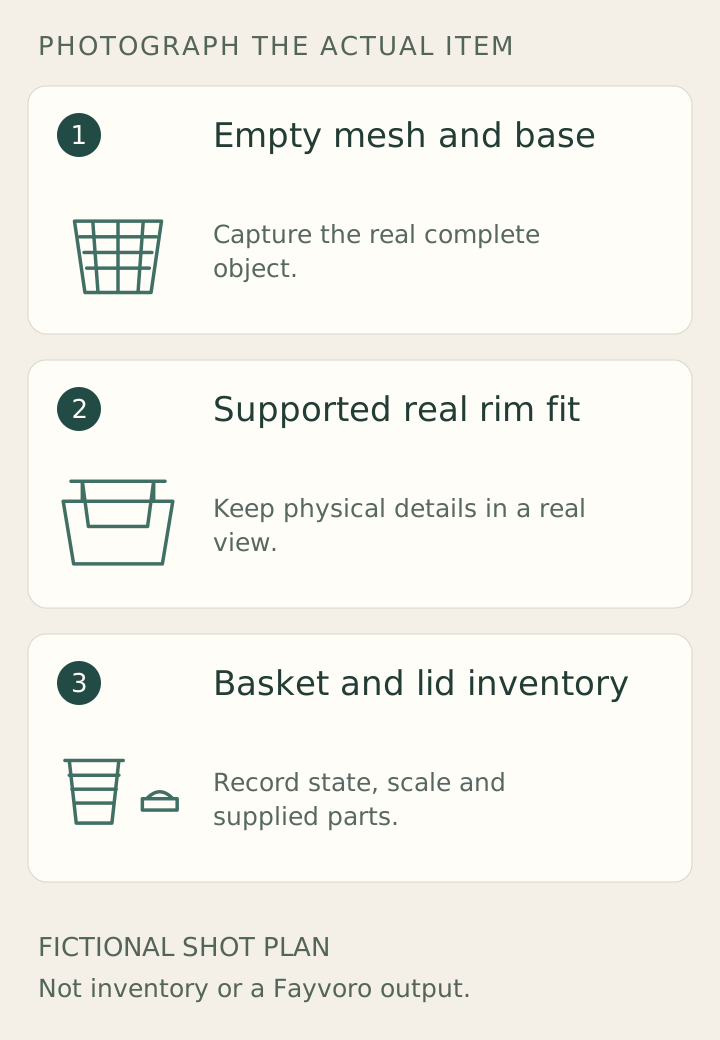
Photograph the actual empty filter with light that separates the mesh from its frame. Add a view into the interior and another underneath, preserving seams, rim and base construction. A solid-looking dark silhouette cannot explain whether the bottom is filtered, open or part of a removable assembly.
Finum’s Brewing Basket L distinguishes stainless-steel mesh, its supporting frame and a lid that also serves as a drip tray. That is one specific construction. Your tea ball, chain infuser or basket may close and rest differently; show the actual connection and included parts rather than borrowing a convenient lid function.
Check the supported fit, not just the vessel volume
Measure the real supporting span, basket depth and opening through which it must pass. Then photograph an identified actual cup or pot in a fit demonstration, with the empty basket seated normally. Capacity printed on a mug does not determine rim clearance or how far the filter reaches inside it.
Lay out the actual sale set, distinguishing basket, lid and any separate rest from the demonstration vessel and tea. For a used filter, preserve staining, dents or damaged mesh in condition views. A fine-looking mesh photograph alone cannot verify particle retention, material certification or the quality of a brewed drink.
Keep a styled trial from fabricating filtration
Use an owned empty-infuser photograph in Fayvoro for a dry tabletop setting. Compare mesh continuity, rim support, base and lid against the source. AI can replace mesh with decorative holes, close the filter bottom or create a second frame that makes the basket seem larger.
Keep real interior, underside and fit views in the gallery. Reject added tea, steam or a filled cup presented as an actual brewing test. The editorial shot plan is fictional and does not establish a real infuser’s fit, brewing performance or supplied vessel. Any use demonstration needs the actual item and recorded conditions.