PRODUCT STORIES / A CREATIVE GUIDE

Sewing Thread Product Photography

Keep the spool label tied to the sewn sample.

A close-up of coloured thread does not identify its length, size or sale format. Build the listing around the physical spool and its label, then use a separately recorded stitch sample to show what was actually sewn. Keep thread size distinct from spool dimensions.

Sign up for 3 free credits · Your starting direction is included.See the example
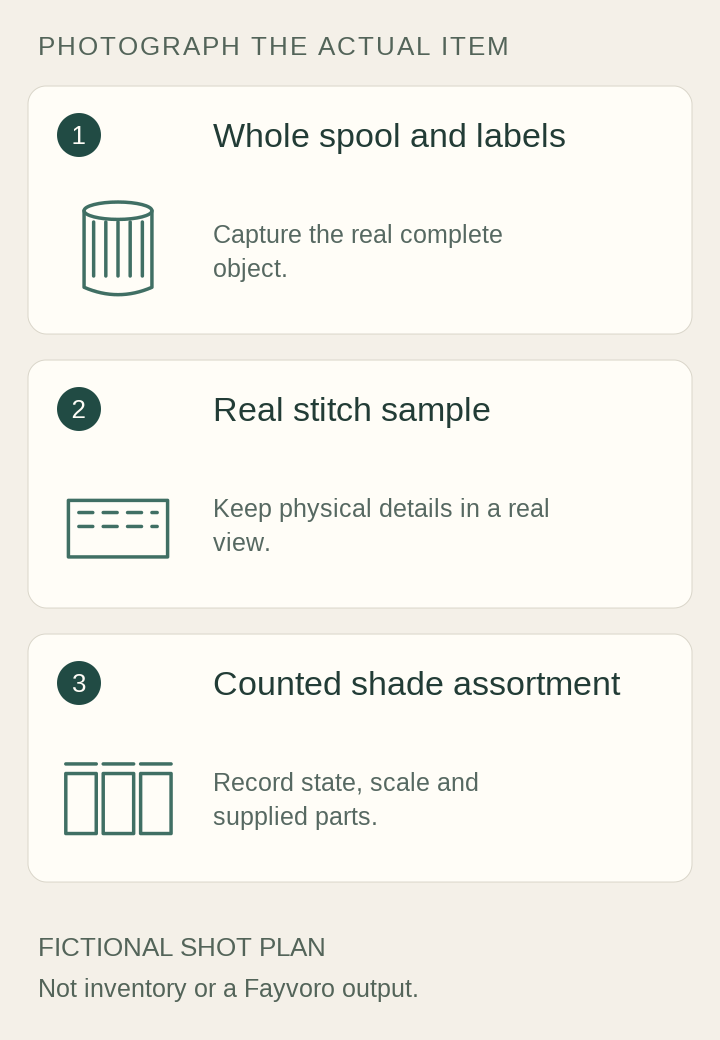
Original teaching plan: Whole spool and labels, Real stitch sample, Counted shade assortment
EDITORIAL CONCEPT
01 / EXAMPLEILLUSTRATIVE CONCEPT
What this shows

Give each factual view a separate job.

These original schematic drawings organize a real shoot. Their shapes and labels are illustrative; they are not specifications for a manufactured item.

Original teaching plan: Whole spool and labels, Real stitch sample, Counted shade assortment
Editorial conceptOriginal fictional shot plan, not an inventory photograph, a Fayvoro output or a customer result. Photograph the actual item for construction, dimensions, included parts and performance.

This image is an editorial concept made for the site. It is not a Fayvoro generation or customer result. AI can change product shape, color, packaging, labels, and text. Check every important detail against the real item.

YOUR STARTING IDEA

Take the direction. Make it your own.

Use my actual sewing-thread spool in one simple tabletop scene. Add no needle, bobbin, stitched fabric, label numbers or extra spools. I will check the wound surface, spool form and colour against the source.
Add your reference photo in the studio, then adjust the direction.
Before you publish

Compare the result with your real product and your destination’s requirements.

  • Material, colour, size and length come from the real label.
  • Spool dimensions are not used as thread-size claims.
  • Physical stitch sample is traceable and excluded if not sold.
  • All spools in an assortment are counted and identified.
02 / A PRACTICAL WORKFLOWSTART WITH YOUR PHOTO
01

Read the spool before comparing colour

Photograph the complete spool, top and bottom labels, and the actual wound thread under consistent light. Record the colour number, thread size or designation, material and stated length in the file mapping. Avoid hiding a shade code under the spool merely to make the arrangement tidy.

Gütermann’s range separates thread thickness from length and shade variants. Those are independent selection fields, not interchangeable names for spool diameter. Do not turn a large spool in a tightly cropped picture into evidence that more thread is included than the checked label states.

Tape Measure Product Photography — Keep a real scale legible from zero through the relevant span, show both unit faces and end fittings, and distinguish flat tapes from retracting housings.

02

Keep a real stitch sample traceable

If stitch appearance matters, sew a physical sample with the identified spool and record the fabric, needle and settings used. Photograph that sample separately from unused stock. A dark line on a pale swatch can reveal the stitch without implying the sample fabric is part of the offer.

For mixed sets, show every supplied spool and map each label to its position. Avoid borrowing a manufacturer’s colour card as a photograph of the sold batch. Differences in light and screens remain possible; a generated shade variation is not a measured substitute for a missing physical colour.

03

Inspect winding and labels after a scene trial

For Fayvoro, begin with an owned, readable spool reference and request a quiet sewing-table background. Check the spool end shape, wound surface and visible colour. AI can invent label numbers, remove thread from the core or add needles and bobbins.

Keep the original labels and actual stitch sample in the gallery. A styled output does not verify seam strength, machine compatibility, fibre content or thread length. Reject a candidate with rewritten identifiers; do not publish a plausible-looking but wrong colour code as the product the buyer will receive.

Common questions

A few things to know.

Is thread weight the weight of the spool?

Not necessarily. Preserve the maker’s exact size designation and distinguish it from package mass or physical dimensions.

Can AI create a colour chart from one spool?

It can imagine colours. That chart cannot verify actual shade variants or replace their real photographs.

Make your image with intention.