02 / A PRACTICAL WORKFLOWSTART WITH YOUR PHOTO
01Choose a truthful preview asset
Decide whether the link represents one SKU, a bundle or a collection. Keep the pictured quantity and variant consistent with the landing page. Use an uncluttered composition where essential product edges remain visible after a plausible crop; avoid relying on tiny image text for the offer.
The Open Graph protocol defines page metadata including a title, type, image and URL, with optional image dimensions and descriptive alternative text. It does not set one universal display ratio for every receiving app. Inspect the current documentation or actual preview for the destination you need.
Prepare the site-owner handoff
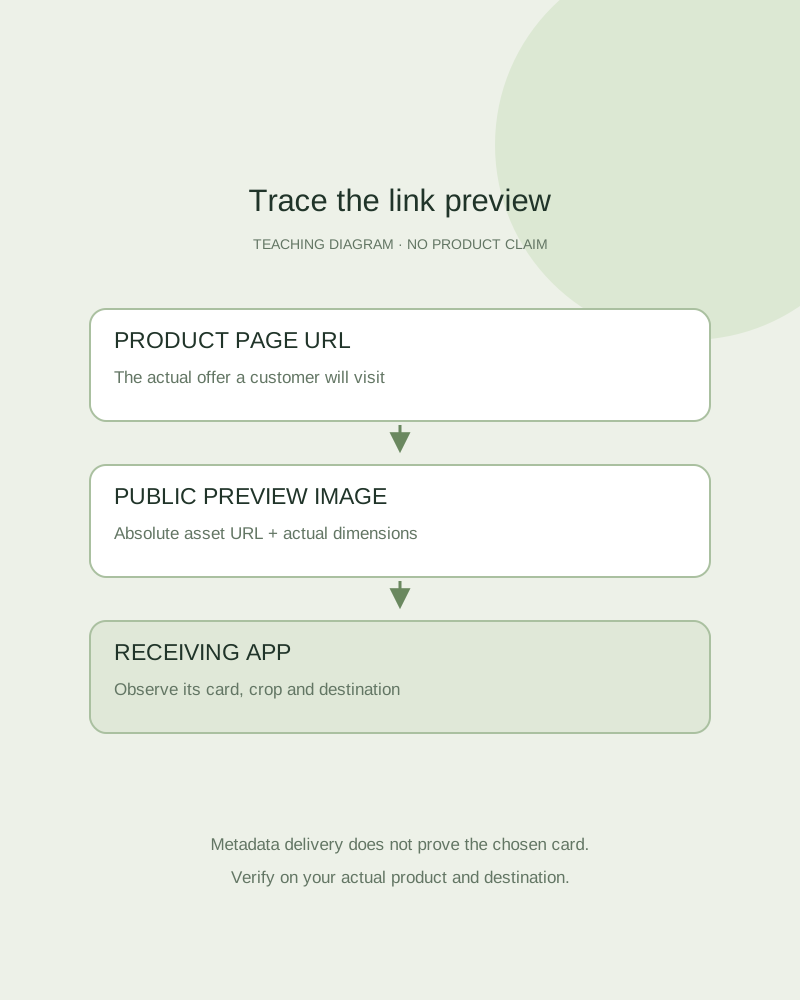
Record the canonical product-page URL, absolute public image URL, title, description and meaningful image description. Note the actual exported width and height. Make sure the image is accessible without a signed-in session and that its content type matches the file.
If a new image replaces an old card, record the new asset URL and the page revision. Receiving applications may cache previews; changing a local filename alone does not demonstrate that a shared link has updated. Fayvoro does not write your store’s Open Graph tags or clear another service’s cache.
Check the actual card without guessing
Use an allowed preview tool or a controlled share of your own product link in the receiving app. Compare title, image, crop and destination, and record the time of the check. A successful image download is a delivery check, not proof that the app chose that file.
Fayvoro offers 1:1, 4:5 and 9:16 generation formats, not every possible card ratio. A separate crop in your editor may be needed, and it cannot restore content outside the image. Keep real product details accurate after generation and crop, then retain a factual original if the preview implies a different item.