02 / A PRACTICAL WORKFLOWSTART WITH YOUR PHOTO
01Photograph the actual spiral or channel
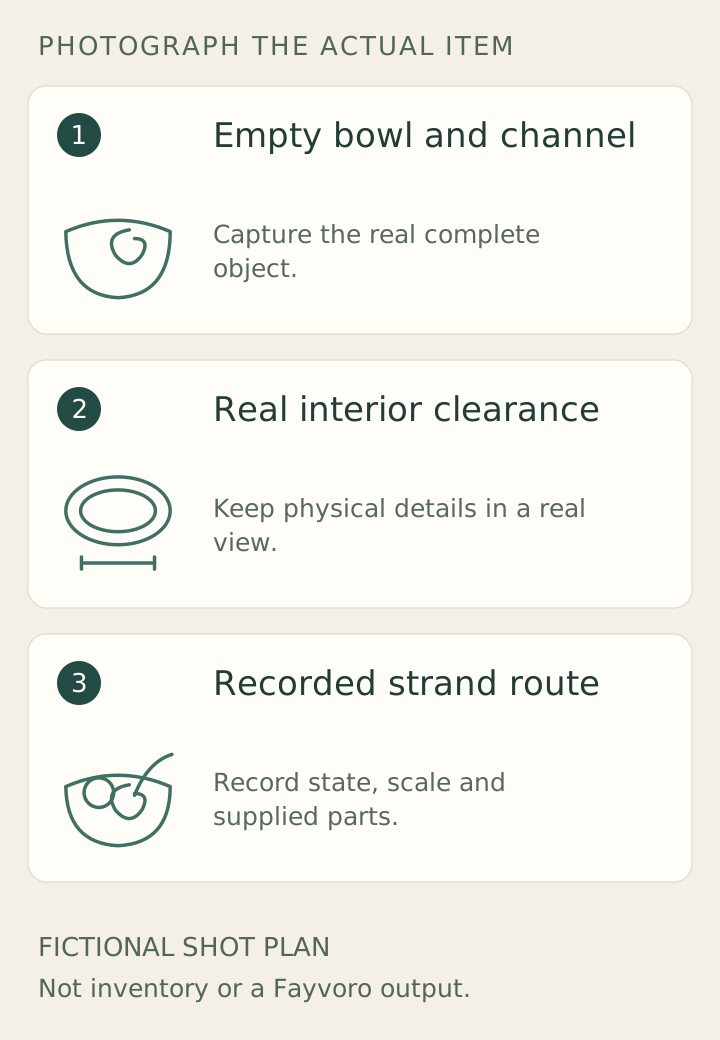
Start with an empty front view that exposes the full channel, then add a close-up of its entry and cut edges. A high angle should show the mouth and inner surface without hiding the opening behind the rim. Keep a real underside view for the foot and maker’s mark.
Jogita Art Studio describes a hand-carved spiral on an actual ceramic bowl. Handmade openings can vary; record the sold unit or clearly identified representative according to your offer. Do not smooth an irregular cut edge into a fictional perfect slot while representing its condition.
Measure inside clearance separately from outside size
Record opening width, usable interior dimensions and the widest exterior dimension as separate facts. A thick wall can make a bowl look larger than its usable space. If showing a yarn ball, state its measured size and keep it in the same real bowl used for the dimension record.
For a routing demonstration, thread a real strand as the actual channel allows and make the strand path visible. A photograph cannot establish snag-free behaviour for every fibre or prove the bowl will never move. Identify yarn, needles and hooks as props unless they are genuinely included.
Keep the channel intact after a scene trial
Upload an owned empty-bowl photograph to Fayvoro and request a simple craft tabletop. Compare the slot direction, rim, wall and base with the source. AI may close the spiral, cut a second opening or merge a strand into the ceramic.
Retain actual slot and interior photographs in the listing even if you use a secondary scene. Do not reconstruct an unseen channel from a back-only reference. A fictional yarn arrangement is not a real routing test, and the schematic here does not supply dimensions or a snag-resistance claim.