02 / A PRACTICAL WORKFLOWSTART WITH YOUR PHOTO
01Record the real paint assortment
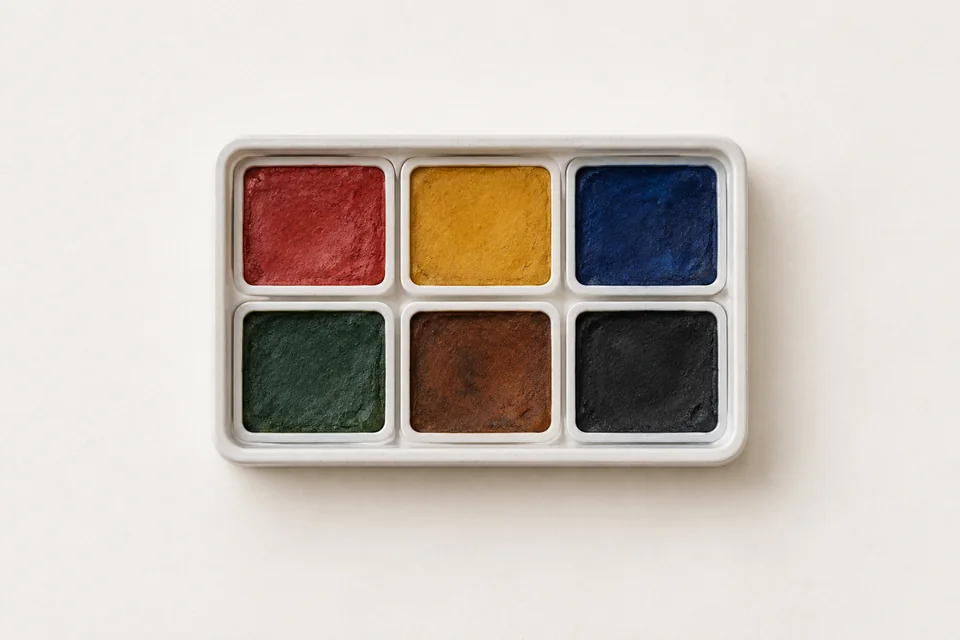
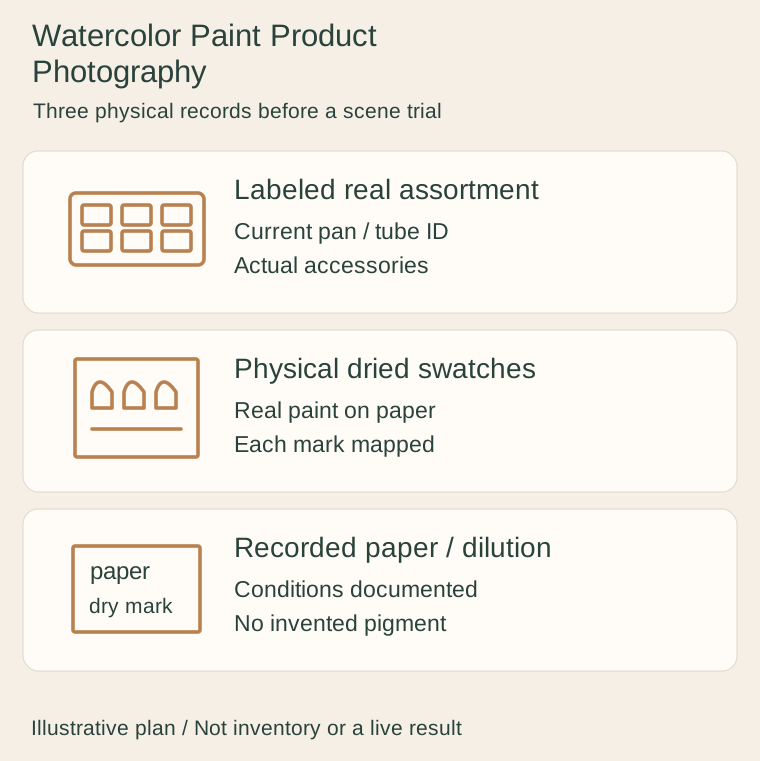
Photograph the actual open set or labeled tubes, keeping each position tied to a colour name or SKU in checked page text. Record which pans, mixing surfaces, brushes or other accessories are supplied. A decorative brush beside the set should not silently become part of the offer.
Use readable real label details for pigment identity, format and amount. Winsor & Newton’s paint example separates physical format variants and swatch images. Treat it as an example of distinct photo roles; its pigment, size and performance statements do not establish facts about another seller’s paint.
Make the swatch a physical record
Create a dried swatch sheet from the actual paint using recorded paper and application conditions. Label the sheet outside the photograph or with your own checked markings so every stroke maps to the sold paint. Explain whether a mark is concentrated, diluted or layered; do not describe an AI colour patch as a pigment test.
Photograph the sheet under consistent light alongside a relevant neutral reference where useful. Paper colour and dilution can change appearance, and a screen image does not establish exact colour or lightfastness. Keep manufacturer specifications and any real performance test separate from the visual comparison.
Explore a palette scene without replacing swatches
Use the approved real paint-set photograph to try one uncluttered artist-desk setting in Fayvoro. A generated image may invent pans, move colour positions or create unrealistic wet marks. It does not measure pigment behaviour or reproduce each paint colour accurately.
Compare the pan count, layout, labels, lid and accessories with the source. Reject any new paint names or altered arrangement. Retain the actual swatch sheet for selection and the factual set inventory for contents. An editorial palette concept illustrates composition only and is not a real paint SKU, mixed colour or customer result.