PRODUCT STORIES / A CREATIVE GUIDE

Washi Tape Product Photography

Unroll enough of the real tape to reveal the pattern.

A tape roll hides most of its continuous pattern. Build the gallery around the actual roll, a real unrolled strip and the sold width and length before a planner-desk composition adds context.

Sign up for 2 free credits · Your starting direction is included.See the example
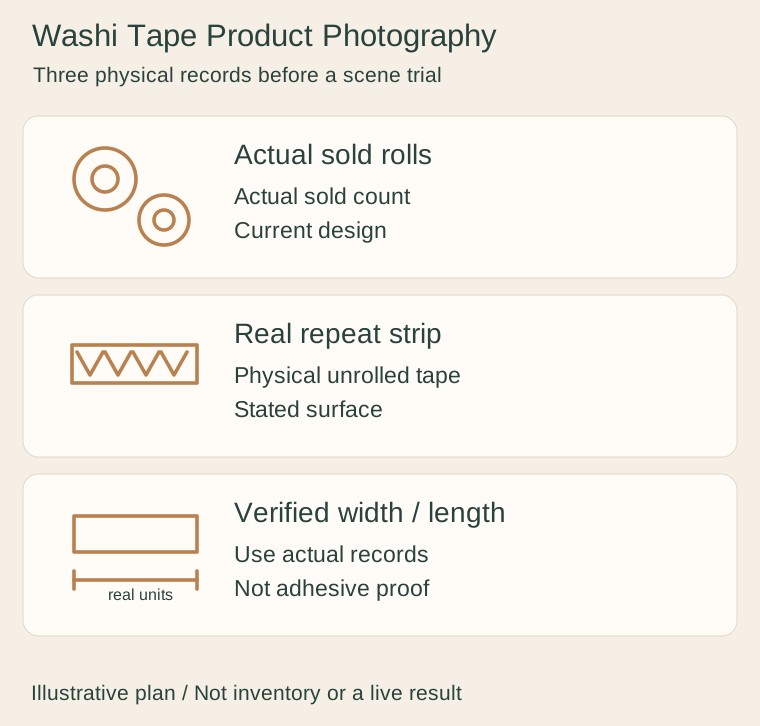
Original teaching plan: Actual sold rolls, Real repeat strip, Verified width / length
EDITORIAL CONCEPT
01 / EXAMPLEILLUSTRATIVE CONCEPT
What this shows

Give each factual view a specific job.

The plan below separates actual product records from a possible secondary scene. Its drawings help organize the gallery; use your own physical item and verified records for every sale fact.

Original teaching plan: Actual sold rolls, Real repeat strip, Verified width / length
Editorial conceptOriginal illustrative teaching plan. Fictional shapes, not a photograph of inventory, a Fayvoro output or a customer case. No dimensions, composition or performance facts are asserted.

This image is an editorial concept made for the site. It is not a Fayvoro generation or customer result. AI can change product shape, color, packaging, labels, and text. Check every important detail against the real item.

YOUR STARTING IDEA

Take the direction. Make it your own.

Explore one simple planner-desk setting from my real washi tape photograph. Add no tape roll, unrolled strip, printed words or planner as supplied goods. I will compare roll count, width, core and pattern with the actual tape.
Add your reference photo in the studio, then adjust the direction.
Before you publish

Compare the result with your real product and your destination’s requirements.

  • Design selection and supplied roll count are explicit.
  • Width and length follow actual product records.
  • Repeat strip and demonstration-sample role are clear.
  • Generated motifs do not replace the real design evidence.
02 / A PRACTICAL WORKFLOWSTART WITH YOUR PHOTO
01

Identify every sold roll

Photograph the actual roll or set with each design visible and connect it to a checked contents list. Distinguish a single roll, mixed set and optional design selection. The apparent diameter of a partially used demonstration roll does not establish the length supplied to a buyer.

Keep the label or product record that establishes nominal width and sold length. The cited mt 2024 collection archive shows different widths and patterns as manufacturer examples, not current stock guarantees or dimensions for all washi tape. Use your actual offer’s specifications.

02

Show a physical repeat strip

Unroll a demonstration length that reveals the pattern continuation, and photograph it on a stated surface. Include a real width reference when helpful, with the checked measurement written outside the image. If translucency matters, photograph the same tape on clearly identified light and darker surfaces.

State when the roll or strip is a used demonstration sample rather than the unopened sale unit. Do not claim repositionability, residue-free removal or archival performance from an attractive image. Those statements need actual product records or real tests on the relevant surface.

03

Try desk atmosphere without rebuilding the pattern

Use a clear actual-roll photo to explore one simple planner-desk scene in Fayvoro. It may repeat motifs incorrectly, change tape width, merge rolls or add decorative strips. It does not generate a guaranteed seamless copy of the supplied print.

Review the roll count, edges, core, motif sequence and colours against the original. Keep the actual unrolled strip as the design reference. Reject invented lettering, additional rolls or a displayed planner implied as supplied. One flat scene is a candidate presentation, not a measured roll or adhesive-performance demonstration.

Common questions

A few things to know.

Can the roll diameter prove its length?

No. Use the stated sold length and verified product records; a used sample can have a different diameter.

Will an AI strip preserve the repeat?

No exact continuous pattern is promised. Keep a real unrolled reference.

Does translucency prove gentle adhesion?

No. Appearance and adhesive performance are separate evidence questions.

Make your image with intention.