02 / A PRACTICAL WORKFLOWSTART WITH YOUR PHOTO
01Make the exact packet variant readable
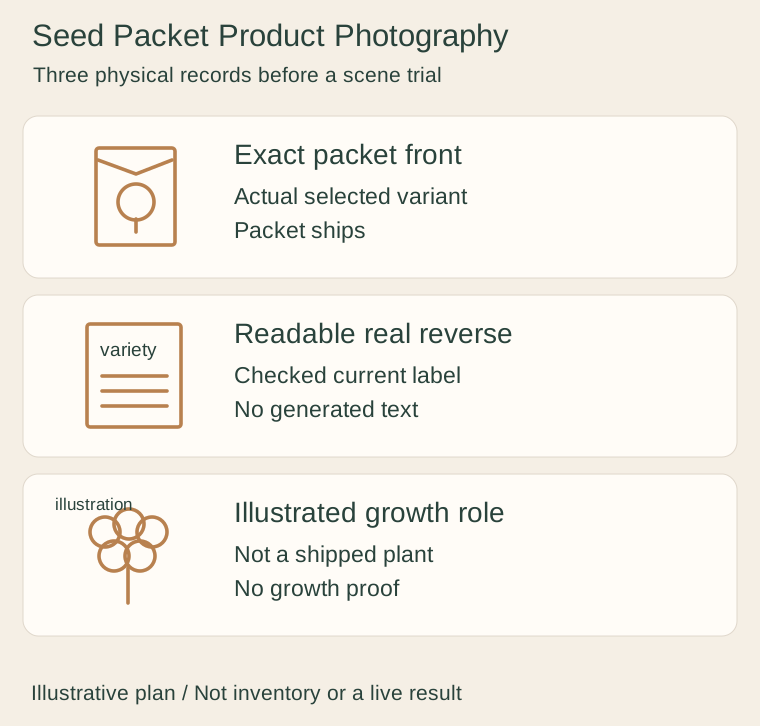
Photograph the current packet front and reverse, keeping the variety name, supplier information and any relevant dated markings readable. Use the actual selected variant rather than a visually similar packet. Record the sale unit clearly when an offer contains several packets instead of one.
A manufacturer’s packet artwork and product information can show how those roles are organized. The Botanical Interests example links a named flower mix to its packet. Do not copy its variety, growing claims or package artwork onto a different seller’s seeds, and do not treat the illustration as a photo of current stock.
Distinguish packet facts from future growth
Keep quantity or pack weight, planting instructions and other factual information tied to current verified label records. If the packet is too small to read in the gallery, add checked text nearby and a real detail photograph. Generated lettering is unsuitable for reproducing instructions or botanical names.
Label a mature-plant image by its actual role and origin. Do not imply that the depicted plant is what will be shipped with the packet. A seed appearance photograph cannot authenticate a variety or prove germination, yield, flowering time or growing suitability; use appropriate records for those statements.
Explore a separate packet scene
For a Fayvoro trial, begin with an approved real packet photo whose visible label has been checked. Explore one simple potting-table setting without adding a mature crop, seeds, tools or pots as included goods. Generation may change the packet face, variety wording and supplied count.
Compare every visible label area and packet outline with the original. Reject incorrect names, invented certifications or an illustrated plant presented as an actual outcome. Retain the factual front/reverse views for buying decisions. This is a scene-planning workflow, not a germination test or a verified seed merchant case.