PRODUCT STORIES / A CREATIVE GUIDE

Rolling Pin Product Photography

Separate the working barrel from its end pieces.

Two rolling pins with similar overall length can offer different usable rolling surfaces. Show the actual barrel, ends and any removable guide rings before staging flour or pastry. Keep a real dough demonstration separate from dimensions, included accessories and verified thickness information.

Sign up for 3 free credits · Your starting direction is included.See the example
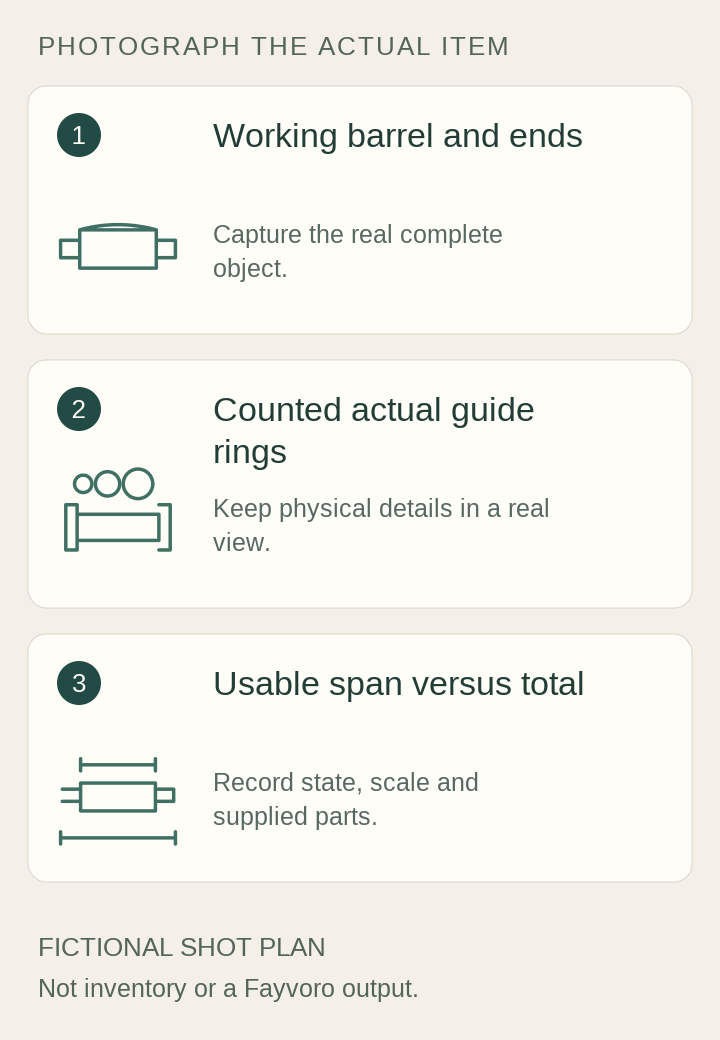
Original fictional shot plan: Working barrel and ends, Counted actual guide rings, Usable span versus total
EDITORIAL CONCEPT
01 / EXAMPLEILLUSTRATIVE CONCEPT
What this shows

Give each real photograph a distinct job.

These original schematic views organize a physical shoot. Their geometry and labels are illustrative, not specifications for a manufactured item.

Original fictional shot plan: Working barrel and ends, Counted actual guide rings, Usable span versus total
Editorial conceptOriginal fictional teaching diagram, not an inventory photograph, a Fayvoro output or a customer result. Use real photos for dimensions, construction, condition and included parts.

This image is an editorial concept made for the site. It is not a Fayvoro generation or customer result. AI can change product shape, color, packaging, labels, and text. Check every important detail against the real item.

YOUR STARTING IDEA

Take the direction. Make it your own.

Set my actual rolling pin on one plain dry kitchen surface. Retain the visible barrel and existing ends or guides. Add no dough, flour, new rings, handle, ruler or text. I will compare the complete geometry with the original.
Add your reference photo in the studio, then adjust the direction.
Before you publish

Compare the result with your real product and your destination’s requirements.

  • Usable barrel and overall length are different records.
  • Actual handles, caps or taper stay identifiable.
  • Detachable guides are counted and correctly assembled.
  • Dough thickness is measured in a real setup if claimed.
02 / A PRACTICAL WORKFLOWSTART WITH YOUR PHOTO
01

Map the barrel and actual end construction

Photograph the complete pin with both ends visible, then add a profile that distinguishes the working barrel from handles or caps. For an adjustable model, lay out only the rings designed to detach and show one correctly reassembled configuration. Do not imply that a solid tapered pin has a hidden bearing mechanism.

Joseph Joseph’s PrecisionPin example identifies removable thickness rings and use without rings. That is one design rather than a universal rolling-pin feature. Check your own item for end caps, axle, handles and guides, preserving its actual assembly instead of adding a colourful ring set to an ordinary wooden pin.

02

Measure the useful span and identify accessories

Record usable barrel length independently of end-to-end length and diameter. If the pin tapers, identify where a diameter is measured. Photograph the real surface under oblique light so grain, joins, chips or wear remain inspectable. Printed measurements should have an unaltered legible close-up, not regenerated characters.

Count guide pairs and record their actual labels from the product documentation. A ring’s outside diameter is not automatically the resulting dough thickness. If you show rolled dough, use an actual identified setup and record the measurement method; flour and pastry props are excluded unless specifically sold with the pin.

03

Review a quiet scene without invented baking results

Upload an owned real-pin photograph to Fayvoro and request a dry uncluttered kitchen surface. Compare barrel shape, handle connections, end caps and any visible guide rings. AI can add a second handle to a tapered pin, invent a scale or merge adjacent rings into the working barrel.

Keep the actual dimension and accessory photographs in the gallery. Reject generated pastry used to imply a real thickness test or baking result. The editorial illustration is fictional, not evidence of wood species, food suitability, smooth rolling or included pieces; those facts remain tied to the actual product and appropriate records.

Common questions

A few things to know.

Is end-to-end length the usable rolling width?

Not always. Measure the working barrel separately from handles, caps and rings.

Can I infer dough thickness from a ring photograph?

No. Use the exact guide labels and documented setup, with a real measured result when needed.

Make your image with intention.