All product image guides Hair Claw Clip Product Photography

Show the teeth and the hinge before the hairstyle.

A claw clip’s closed silhouette may hide the construction buyers are comparing. Make real open and closed views, show the teeth and record the selected size. A secondary display scene does not prove how the clip will hold a particular person’s hair.

Explore a scene from your real photo Two free credits when you sign up. Review the result before publishing.
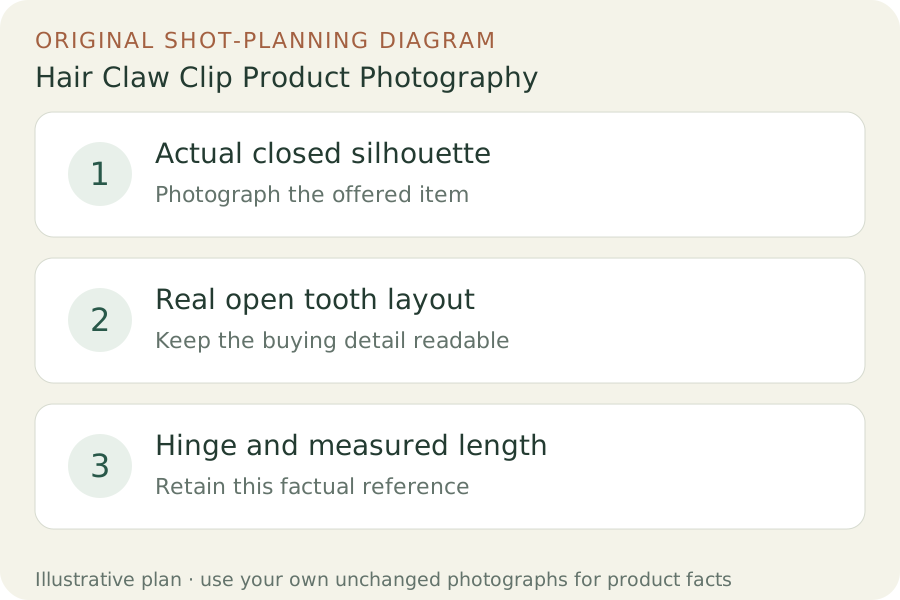
Original teaching diagram: Actual closed silhouette, Real open tooth layout, Hinge and measured length
EDITORIAL CONCEPT
01 / EXAMPLEILLUSTRATIVE CONCEPT
What this shows

Give each photograph one clear job.

Use the three labeled views to plan your factual gallery. The outlines show composition roles only; they contain no observed dimensions, verified materials or performance measurements. Keep real photographs beside any secondary scene candidate.

Original teaching diagram: Actual closed silhouette, Real open tooth layout, Hinge and measured length
Editorial conceptOriginal teaching diagram for shot planning. Illustrative outlines, not a photograph of inventory, a Fayvoro output or a customer example.

This image is an editorial concept made for the site. It is not a Fayvoro generation or customer result. AI can change product shape, color, packaging, labels, and text. Check every important detail against the real item.

02 / A PRACTICAL WORKFLOWSTART WITH YOUR PHOTO
01

Keep the selected clip size and shape together

Record the actual design, finish, size and supplied count. Photograph the closed profile, then make a real open view if it can be positioned without changing or damaging the clip. Keep small, medium and larger models assigned to their actual source images. A scaled-down version of one photograph can conceal different tooth shapes or curvature.

Kitsch presents several clip sizes and distinct styles in its collection. For your own offer, photograph the specific tooth layout and shape rather than borrowing a style name as fit evidence. State dimensions from the actual item or reliable documentation. A generator cannot establish spring strength, comfort or suitability for every hair type.

02

Let the open view answer a construction question

Use a stable camera and broad light that lets both halves of the clip remain readable. Add a closer hinge-and-spring photograph, then another angle that shows the actual curved teeth. Take an overview with the same item so a buyer can locate the detail. Avoid positioning a support across the very opening you want to show.

For a glossy or translucent clip, compare reflections against a neutral reference and retain the actual pattern distribution. A tortoiseshell-style surface may vary between units, so identify unique stock or representative samples accurately. Show real measurements separately. If you include a wearer example, use a real permitted photograph and explain its role; a generated hairstyle cannot demonstrate grip.

03

Try a product-only vanity composition

Upload one clear actual clip photograph to Fayvoro and ask for a quiet vanity display with the clip’s existing state unchanged. Do not ask a closed source to become a factual open-hinge record. Retain the real open, hinge and measurement photographs as the buying references.

Review tooth count, hinge placement, surface pattern, curvature and silhouette. Reject invented teeth, a second spring or a finish that belongs to another variant. A generated person wearing the clip can also imply a fit or holding test that never happened. Prefer a simple product-only scene when your task is to explore display and lighting.
Direction to try

A useful starting note.

Use this as a starting point, then adjust it for your own product. No prompt can guarantee exact product details.

Use my actual hair claw clip photograph for one quiet product-only vanity scene on a neutral surface. Keep the clip in its photographed open or closed state with visible real teeth and finish. Add no hair, person, extra clip or changed hinge. I will compare construction and pattern with the real source.
Before you publish

Check the details.

  • Selected size, design and supplied count match actual stock.
  • Open and closed construction views are real photographs.
  • Teeth, spring and hinge agree with the same item.
  • Surface variation and measurements are accurately described.
  • No imagined hairstyle is used as grip or fit evidence.
Common questions

A few things to know.

Can generation open the clip to show how its hinge works?

It may imagine an opening, but that is not a factual construction photograph. Make a real open view of the actual clip instead.

Can a model image prove the clip holds thick hair?

No. Use actual maker information or an appropriate real demonstration. A generated hairstyle cannot establish grip, comfort or fit.

Should I use one pattern photo for all translucent clips?

Check the actual offer. If pattern distribution varies, identify representative stock or photograph the unique item rather than implying identical markings.

Make your image
with intention.

Explore a scene from your real photo