PRODUCT STORIES / A CREATIVE GUIDE

Ceramic Vase Product Photography

Show the vase opening before filling it with flowers.

The outside silhouette of a vase does not reveal how many stems fit through its neck. Separate an empty mouth and interior view from a real floral arrangement, and keep the sold vase distinct from the bouquet.

Sign up for 3 free credits · Your starting direction is included.See the example
Original teaching plan: Empty mouth, Neck measurement, Same-vase stem example
EDITORIAL CONCEPT
01 / EXAMPLEILLUSTRATIVE CONCEPT
What this shows

Plan the factual views before the optional scene.

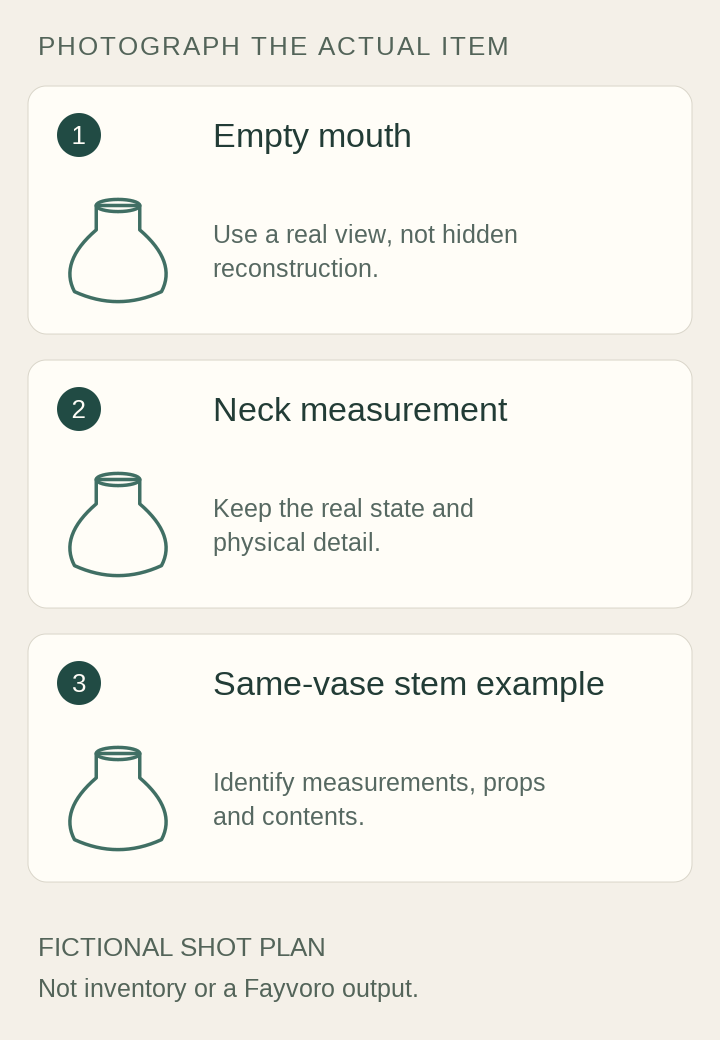
These schematic drawings identify three different jobs for the gallery. They do not describe a manufactured item or replace an actual capture of its hidden details.

Original teaching plan: Empty mouth, Neck measurement, Same-vase stem example
Editorial conceptOriginal fictional shot plan, not inventory photography, a Fayvoro output or a customer result. Use the actual item and verified records for dimensions, contents and performance.

This image is an editorial concept made for the site. It is not a Fayvoro generation or customer result. AI can change product shape, color, packaging, labels, and text. Check every important detail against the real item.

YOUR STARTING IDEA

Take the direction. Make it your own.

Explore one uncluttered side-table scene from my actual empty ceramic vase. Add no flowers, water, handles or markings. I will inspect the mouth, neck, foot and glaze against the physical vessel.
Add your reference photo in the studio, then adjust the direction.
Before you publish

Compare the result with your real product and your destination’s requirements.

  • Empty mouth and neck are visible on the actual vase.
  • Inner opening is not replaced by exterior diameter.
  • Bouquet and display furniture are identified as props.
  • Water-use information comes from verified product records.
02 / A PRACTICAL WORKFLOWSTART WITH YOUR PHOTO
01

Capture the empty mouth and neck

Photograph the actual vase empty from a front view and a higher angle that exposes its mouth. A wide body can have a narrow neck; neither exterior diameter nor height tells a buyer the usable opening. Include any lip, inner restriction and irregular handmade shape.

IKEA’s STJARNLUDD example specifically distinguishes a narrowed opening in its product description. Use that feature as a reason to record your own mouth clearly, not as a universal vase specification. Avoid filling the opening with dark shadows or decorative stems in every image.

02

Make a real arrangement reproducible

Record the actual opening and height with their measurement methods. If an arrangement helps explain the vase, photograph a permitted real bouquet in that same vessel and identify stems as props unless supplied. Keep one empty image beside the arrangement so foliage does not hide the neck.

A vase-looking object may be intended only for dry decoration. Check the maker’s actual water-use instructions and any liner that is supplied; flowers in an image cannot prove a watertight glaze or leak-free base. For a one-off piece, retain real marks and condition rather than smoothing them into a generic surface.

03

Try an empty-vase scene first

Use a clear real photo in Fayvoro to explore one side-table composition with the empty vase. An output may change the mouth width, interior, foot or glaze pattern. Compare the candidate with the actual empty reference and reject a widened neck or invented handle.

An optional flower scene should remain secondary and should not establish stem capacity or water compatibility. Keep the measured mouth and real arrangement as the buyer evidence. The teaching plan here is fictional: its outline is not a stocked vase, a successful product-fidelity test or a customer example.

Common questions

A few things to know.

Does a flower photo prove the vase holds water?

No. Check the exact product’s verified instructions and use a real demonstration only when permitted.

Should my main view show the vase empty?

An empty factual view helps show the item being sold. Keep any arrangement as another view rather than hiding the opening everywhere.

Make your image with intention.