PRODUCT STORIES / A CREATIVE GUIDE

Coaster Product Photography

Show the underside and sold count as clearly as the top.

The decorated face is only part of a coaster purchase. Buyers may also need to know the number supplied, the underside material and whether a holder is included. A styled cup does not answer those questions by itself.

Sign up for 3 free credits · Your starting direction is included.See the example
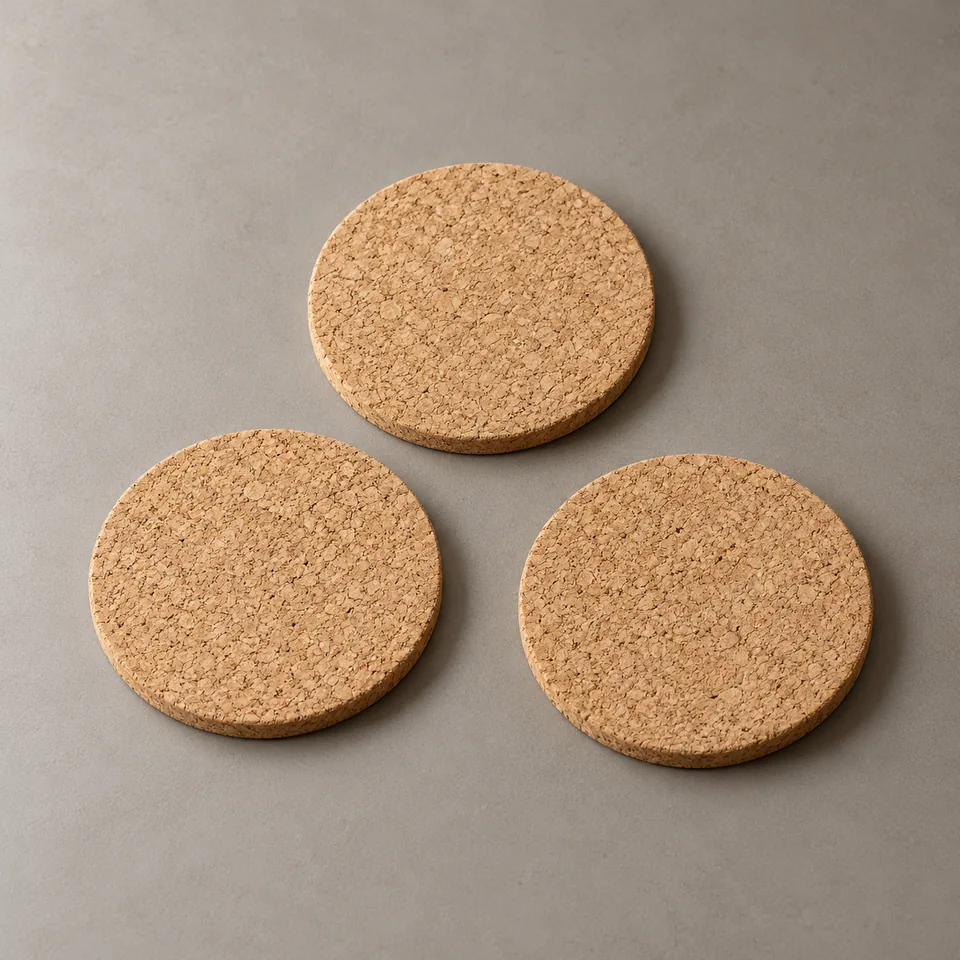
Three fictional round cork-like coasters in a separated editorial composition.
EDITORIAL CONCEPTEDITORIAL CONCEPT. The three-piece arrangement is a fictional composition, not a seller set count or a heat and water performance demonstration. Not a live Fayvoro generation or customer case.
01 / EXAMPLEILLUSTRATIVE CONCEPT
What this shows

Give each view a specific job.

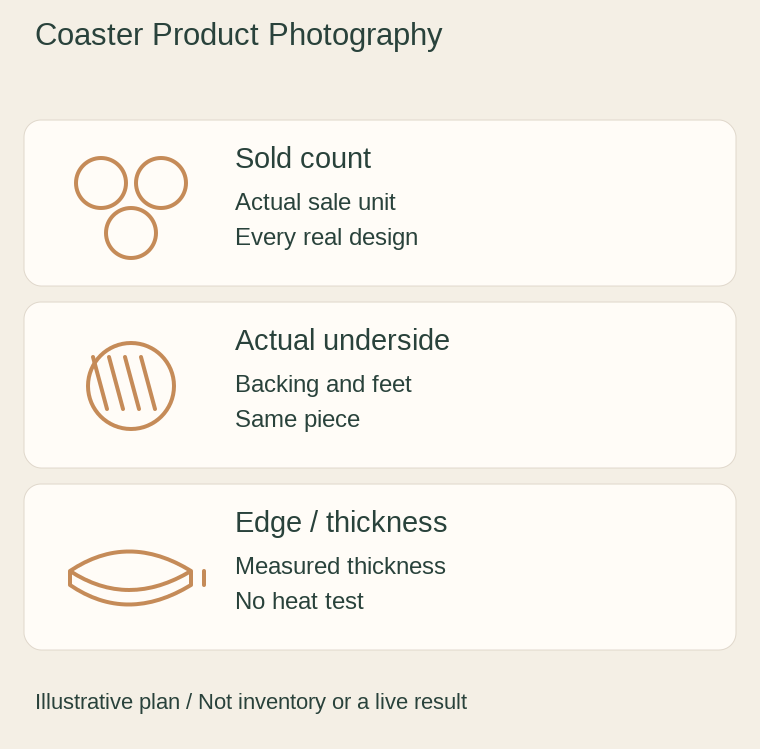
Use this illustrative plan to organize real evidence and a separate optional scene. The drawn objects and quantities do not specify the item you sell.

Original illustrative plan: Sold count, Actual underside, Edge / thickness.
Editorial conceptOriginal teaching diagram. It is not a photograph of inventory, measured specification, live Fayvoro result or customer case.

This image is an editorial concept made for the site. It is not a Fayvoro generation or customer result. AI can change product shape, color, packaging, labels, and text. Check every important detail against the real item.

YOUR STARTING IDEA

Take the direction. Make it your own.

Use my real coaster photograph to explore one uncluttered tabletop scene. Add no cup, holder, extra coaster or new pattern that is absent from the reference. I will check the actual count, edge, finish and design against the product.
Add your reference photo in the studio, then adjust the direction.
Before you publish

Compare the result with your real product and your destination’s requirements.

  • Every supplied pattern and the actual set quantity have real images.
  • The underside and edge belong to the same actual piece.
  • Cups and holders are identified as included or as props.
  • Heat and water claims are not inferred from a styled image.
02 / A PRACTICAL WORKFLOWSTART WITH YOUR PHOTO
01

Make the sale count unambiguous

Lay out the actual sale unit without stacking every piece. Keep the complete quantity readable in one factual photograph, then take a separate detail of a representative face. If the set uses different patterns, show every supplied design rather than repeating one favourite face. Photograph a holder only if it is included, or identify it as a prop.

The cited IKEA item states its own pack quantity and material. It is a reminder to read the actual offer, not a standard count for all coaster sets. Use your own confirmed set contents and documented dimensions. A decorative arrangement of three fictional coasters on this page is an editorial composition, not a specification for your inventory.

Placemat Product Photography — Photograph a full empty dining mat with edge and usable surface dimensions, exact sold count, and separate table setting where dinnerware is not implied included.

02

Connect the top, edge and underside views

Turn the same representative piece over to show real backing, feet or surface contact. Add an edge view that reveals thickness and any raised lip. Keep camera angle and light from concealing a laminate seam, uneven edge or normal handmade texture that matters to the purchase.

If you use a cup to communicate placement, choose a real cup and photograph the actual fit. State that it is a styling prop when not sold. Measure diameter or width from the actual item rather than a generated object. A dry tabletop picture cannot prove resistance to heat, liquid, staining or scratching; those claims need their own factual support.

03

Review a tabletop scene as a separate asset

Upload a clear real-product source for one Fayvoro table-setting experiment. Inspect the output for merged pieces, a changed rim, invented backing and a different pattern count. The model may turn a flat coaster into a bowl or make the displayed set larger than the sale quantity.

Retain the real inventory, underside and edge views even if you accept a secondary scene. Keep plates, cups and other tableware out of the included-contents claim. Use the generated composition for reviewed atmosphere only; do not describe it as a real performance demonstration.

Common questions

A few things to know.

Should I stack the whole set for the main image?

A stack may show thickness, but it can hide quantity and patterns. Include a separate real laid-out inventory.

Can a generated cup prove the coaster fits?

No. Use a real measured item and an actual placement photo when fit matters.

Is the three-piece scene a real coaster product?

No. It is a labeled fictional editorial concept, not a stocked set or a live Fayvoro result.

Make your image with intention.