02 / A PRACTICAL WORKFLOWSTART WITH YOUR PHOTO
01Record the dry sale product
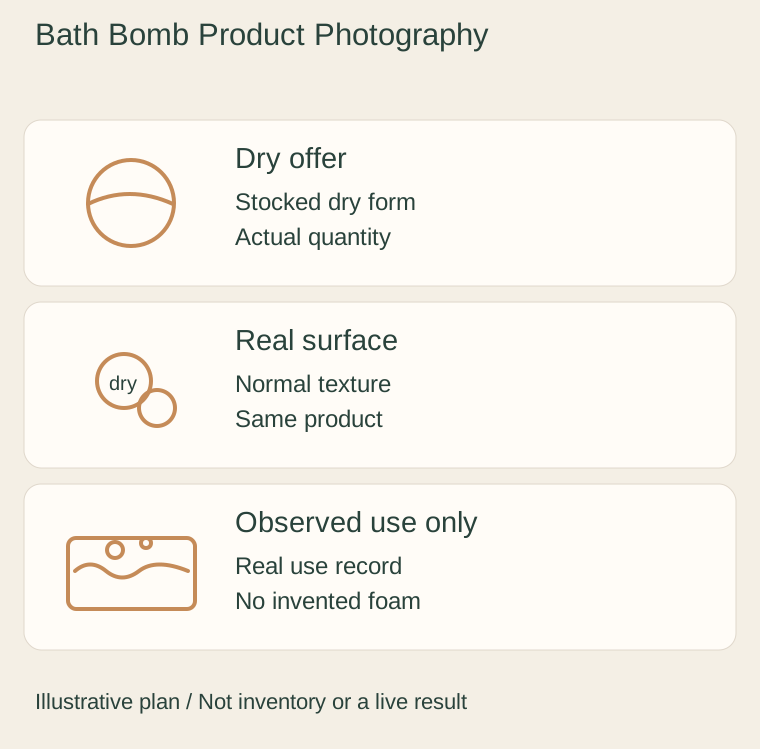
Begin with the actual stocked shape and packaging state, whether it is a sphere, moulded form or another design. Photograph a complete unit with its front, back or seam as relevant. Keep normal surface texture visible instead of smoothing every powder edge into a glossy object that customers will not receive.
For a multipack, lay out the real included pieces and identify the count separately from loose styling props. Record weight and dimensions from the actual item information. If normal handmade variation affects colour or decoration, use a representative physical sample and explain the variation in checked listing text.
Make an actual-use record when the water effect matters
If the listing needs dissolution imagery, document the real product being used under its own directions. Keep the dry reference, selected sample and use sequence linked to the same product revision. Capture the observed result; do not substitute a more dramatic dye pattern or foam texture from another item.
The cited Lush page separates dry-product and in-water views. It illustrates distinct image roles, not the behaviour of your bath product. Fragrance, ingredients and suitability claims require the maker’s factual information. A colour cloud does not prove a skin benefit, a universal water result or a duration of use.
Use AI for a dry surrounding scene
Upload your approved dry product photo to trial a restrained bathroom-shelf setting. Keep the scene outside the bathwater demonstration task. Fayvoro can change surface texture, mould detail, colour, quantity or decoration, so inspect those against the real source before any publication.
Retain the genuine dry offer image and any genuine use footage beside the optional scene. Reject added petals, ingredient imagery, invented packaging and a changed size. The editorial teaching diagram is a shot plan; it is not a real bath test, customer outcome or live Fayvoro generation.